

Key Takeaways
Option A
DIY Oil Change
The hands-on, cost-conscious approach for mechanically comfortable drivers.
Best for: Drivers who have basic mechanical confidence, a suitable workspace, and want direct control over the parts and oil used.
Option B
Shop Oil Change
The convenient, professionally handled option for most everyday drivers.
Best for: Drivers who prioritize convenience, lack workspace or tools, or want a professional to inspect the vehicle at the same time.
If you want to minimize out-of-pocket cost and enjoy working on your car
DIY Oil Change
Material costs alone are generally lower, and the process is straightforward once you have the right tools and a safe place to work.
If you live in an apartment or lack a safe, level workspace
Shop Oil Change
Working under a vehicle without proper ramps or jack stands is genuinely dangerous. A shop eliminates that risk entirely.
If you want a vehicle inspection bundled with routine maintenance
Shop Oil Change
Technicians typically check fluid levels, brakes, tires, and filters during a service visit - catching issues a DIY job might miss.
If you drive an older vehicle and want full control over oil type and filter brand
DIY Oil Change
Doing it yourself lets you choose exactly which oil grade and filter go into the engine, with no uncertainty about substitutions.
What Each Approach Actually Involves
An oil change is one of the most frequent maintenance tasks any vehicle requires, and the basic job is the same regardless of who does it: drain the old oil, replace the filter, and refill with fresh oil to the correct level and grade. The difference lies in who performs those steps, where, and with what oversight.
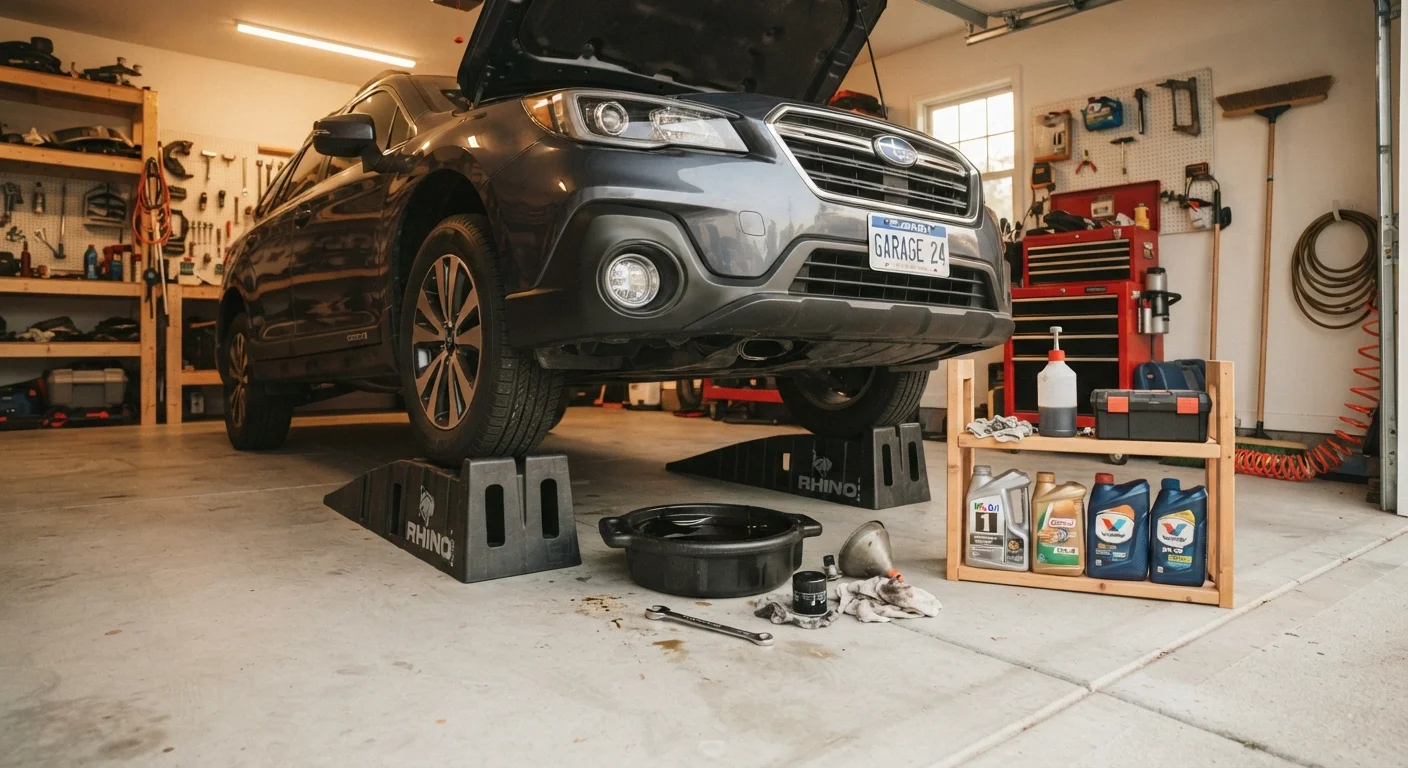
A DIY oil change means gathering supplies - the correct oil type and quantity, a compatible filter, a drain pan, a wrench, and a way to safely elevate the vehicle - and doing the work yourself. It typically takes 30-60 minutes for someone comfortable with the process. A shop oil change means dropping off or waiting while a technician handles all of it, usually in 15-30 minutes, using a lift and professional disposal systems.
Before choosing, it helps to know what oil grade and change interval your vehicle actually requires. See how modern oil change intervals work - the old 3,000-mile rule no longer applies to most cars.
Cost Comparison: Materials vs. Full-Service Pricing
Cost is usually the first reason drivers consider doing it themselves. The material cost of an oil change - oil plus filter - varies by vehicle and oil type. Conventional oil jobs tend to run lower; full-synthetic costs more but is required by many modern engines.
| Criterion | DIY Oil Change | Shop Oil Change |
|---|---|---|
| Typical material cost (conventional oil) | ~$25-$45 | ~$40-$75 |
| Typical cost (full synthetic) | ~$45-$80 | ~$75-$130 |
| Time required | 30-60 minutes | 15-45 minutes (wait time varies) |
| Tools needed | Drain pan, wrenches, ramps/stands | None - shop provides all |
| Used oil disposal | Driver transports to drop-off | Handled by shop |
| Vehicle inspection included | No (unless you check yourself) | Often included |
| Risk of error | Present if inexperienced | Lower, varies by technician |
The DIY savings are real but not always as large as people expect, particularly if you factor in the one-time cost of tools (drain pan, filter wrench, funnel, ramps or jack stands). Those tools pay for themselves over several changes. Used oil disposal is free at most auto parts retailers, but you must transport it yourself.
For a fuller picture of what regular upkeep costs over the life of a vehicle, see routine maintenance costs every car owner should plan for.
Safety and Risk Considerations
The DIY route introduces risks that a shop setting eliminates. Working under a vehicle supported only by a floor jack - without jack stands or ramps - is unsafe and should never be done. The vehicle must be on a level, stable surface with the engine cool enough to handle safely.
Other common DIY errors include: using the wrong oil viscosity for the engine, over-tightening or under-tightening the drain plug or filter, and forgetting to reinstall the drain plug before adding new oil. Any of these mistakes can cause oil leaks or engine damage. If you're uncertain about your vehicle's specifications, consult the owner's manual or a qualified mechanic before proceeding.
Always Verify the Oil Specification
Every vehicle has a manufacturer-specified oil viscosity rating (such as 5W-30 or 0W-20) listed in the owner's manual. Using the wrong grade - whether in a DIY job or at a shop - can affect engine performance and warranty coverage. Confirm the specification before any oil change, and don't assume a shop's default oil matches what your engine requires.
Shops aren't without their own concerns. Service quality varies by location and technician. It's reasonable to ask what oil type and filter brand will be used, and to verify the work matches your owner's manual specifications. For context on which oil types suit which engines, see engine oil types explained.
Who Should DIY - and Who Probably Shouldn't
The DIY oil change suits drivers who are comfortable following instructions, have a safe and accessible workspace, and want hands-on involvement in their vehicle's upkeep. It's one of the more forgiving entry points into car maintenance - less technically demanding than brake work or suspension jobs. For a broader look at what else is realistically within reach, under-the-hood tasks you can realistically handle yourself is a useful reference.
The shop route makes more sense for drivers without a safe workspace, those unfamiliar with their vehicle's undercarriage, or anyone whose car uses a difficult-to-access filter or drain plug configuration. It's also the better choice if your time is limited and a professional inspection has value to you.
Whichever method you use, maintaining a consistent schedule matters more than who does the job. Skipping or delaying oil changes creates engine wear that compounds over time - the downstream costs of deferred maintenance are worth understanding before treating an oil change as optional.