

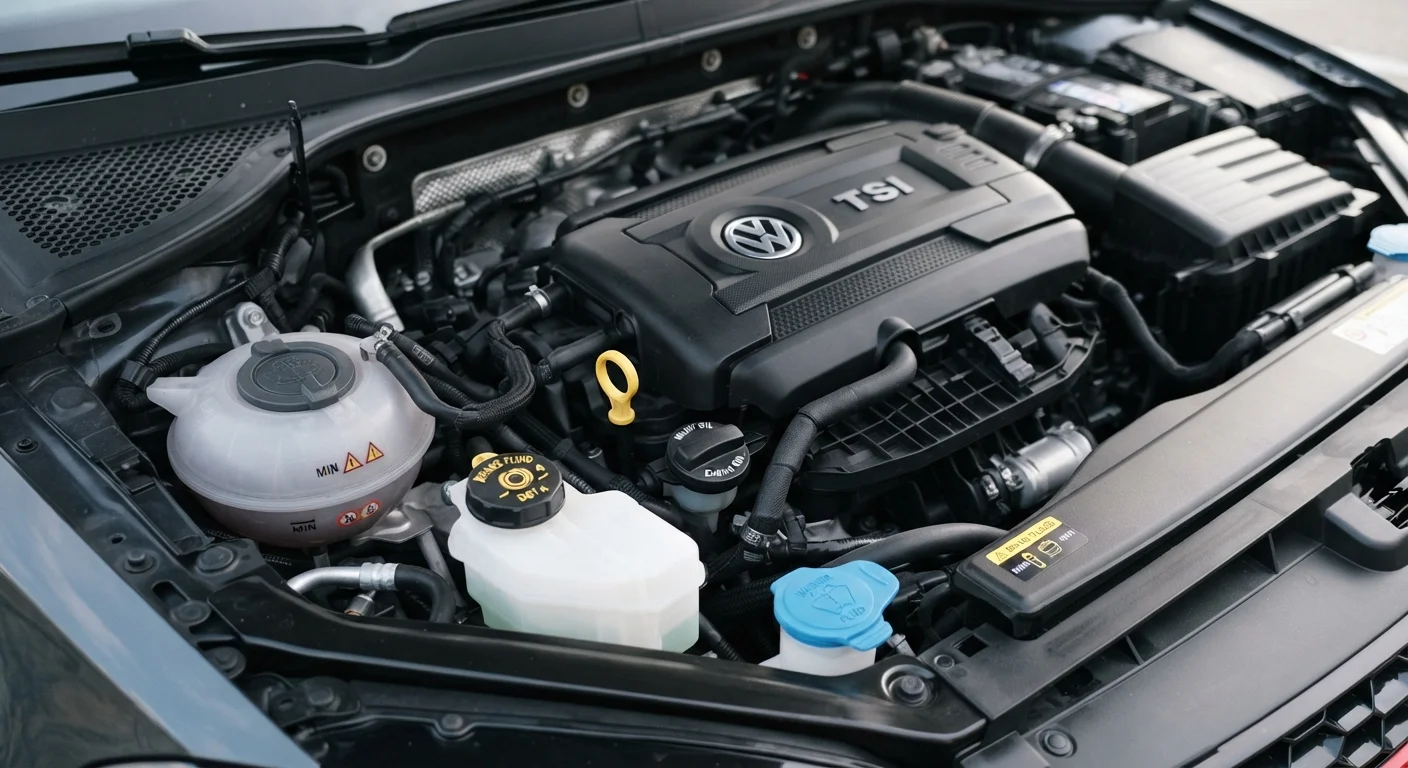
The Seven Fluids Every Driver Should Know
Modern vehicles rely on a handful of essential fluids to keep mechanical parts lubricated, cooled, pressurized, and clean. If you're new to hood-lifting, start here. Each fluid has a distinct color, a dedicated reservoir, and clear warning signs when something goes wrong. This reference card covers all seven.
If you'd like a step-by-step walkthrough of the actual checking process, see our guide to checking and topping off your car's fluids.
Fluid-by-Fluid Breakdown: Color, Location, and Warning Signs
Dipstick
A long, thin metal rod inserted into a fluid reservoir - typically oil or transmission fluid - used to check fluid level and condition by reading the markings on the end.
Coolant (Antifreeze)
A liquid that circulates through the engine and radiator to regulate operating temperature. It prevents both overheating in summer and freezing in winter.
Brake Master Cylinder
The hydraulic component that converts brake pedal pressure into fluid pressure throughout the brake lines. The brake fluid reservoir sits on top of it.
Differential
A mechanical assembly that allows wheels on the same axle to rotate at different speeds. It requires its own gear oil separate from engine or transmission fluid.
DOT Rating
A U.S. Department of Transportation classification for brake fluid (e.g., DOT 3, DOT 4) that defines minimum performance standards including boiling points.
Viscosity
A measure of a fluid's resistance to flow, commonly expressed in motor oil grades such as 5W-30. The right viscosity for your engine is listed in the owner's manual.
| Fluid | Typical Color | Where to Find It | Warning Signs |
|---|---|---|---|
| Engine Oil | Amber when new; dark brown to black with use | Dipstick near the engine center; oil filler cap on top of engine | Low dipstick reading, dark/gritty texture, burning smell, oil pressure warning light |
| Coolant (Antifreeze) | Green, orange, pink, or blue depending on formulation | Translucent plastic overflow reservoir near the radiator; labeled with a temperature icon | Overheating gauge, sweet smell, white exhaust smoke, visible puddle under front of car |
| Transmission Fluid | Red or pink when fresh; brown or dark when degraded | Separate dipstick (automatic transmissions) or fill plug (manual); consult your owner's manual | Slipping or delayed gear shifts, burnt smell, dark color on dipstick, reddish puddle |
| Brake Fluid | Clear to light yellow; darkens with age | Small translucent reservoir on top of the brake master cylinder, usually near the firewall on the driver's side | Spongy brake pedal, longer stopping distance, brake warning light, low reservoir level |
| Power Steering Fluid | Clear, pink, or light red (may overlap with transmission fluid) | Reservoir labeled with a steering wheel icon, typically on the passenger side of the engine bay | Whining noise when turning, stiff steering wheel, visible leak under front of car |
| Windshield Washer Fluid | Blue, green, or orange | Plastic reservoir with a windshield/water icon; usually easy to access near the front of the engine bay | Empty reservoir indicator on dash, streaky or dry wiper action |
| Differential / Gear Oil | Amber to dark brown | Rear axle housing on rear-wheel-drive vehicles; front differential on 4WD/AWD models | Whining or grinding from axle area, gear oil smell (sulfur-like), visible seepage around axle seals |
Note: Electric vehicles and some newer hybrids may omit transmission fluid and power steering fluid entirely. Always consult your owner's manual for your specific model.
What to Do When You Spot a Leak or Low Level
Finding a puddle under your car or a low fluid reading is a signal worth taking seriously - but not every situation is an emergency. Use color and location as your first clues:
- Clear water under the car on a warm day is typically condensation from the air conditioning system - normal.
- Bright green or orange puddle near the front of the car usually points to a coolant leak. Do not drive with the temperature gauge in the red; engine overheating can cause severe damage.
- Dark brown or black spots directly under the engine suggest an oil leak. A small seep may be monitored short-term; a fast drip warrants a mechanic visit promptly.
- Reddish fluid toward the middle or front of the vehicle may be transmission or power steering fluid - both require attention before they cause component damage.
- Clear to light yellow fluid near a wheel could be brake fluid. Any suspected brake fluid leak is a safety concern; have the vehicle inspected before driving.
For brake-related or coolant-related concerns in particular, err on the side of having a qualified mechanic inspect the vehicle rather than continuing to drive. Low brake fluid or coolant can quickly escalate from a minor issue to a serious safety problem.
New to car ownership altogether? Our beginner's guide to car maintenance covers the foundational habits and vocabulary every driver benefits from knowing.