

Key Takeaways
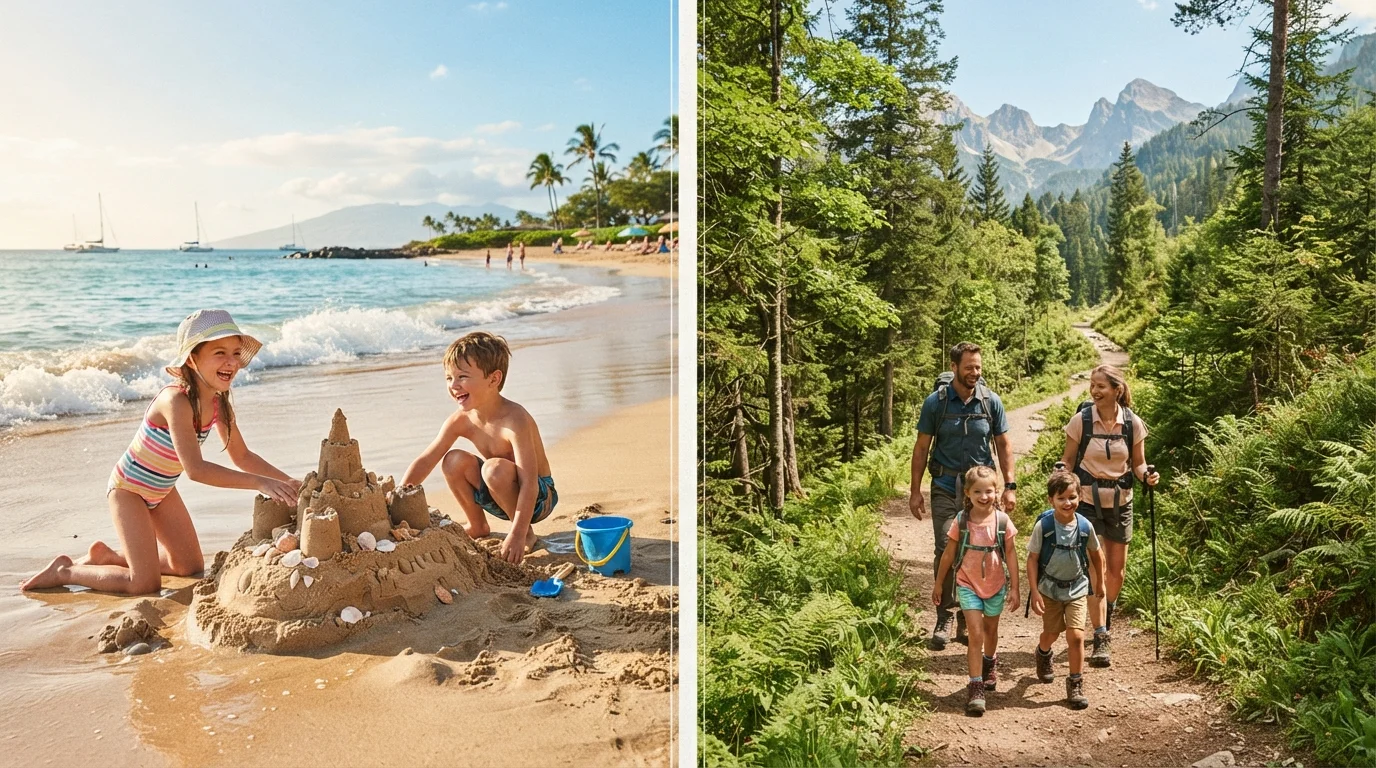
Option A
Beach Vacations
The crowd-pleasing, sensory-rich classic.
Best for: Families who want low-structure, open-ended fun that keeps kids of nearly any age happily occupied without much planning.
Option B
Mountain Getaways
The active, immersive escape into nature.
Best for: Families with older kids or teens who enjoy physical challenges, wildlife, and cooler temperatures away from summer heat.
If your kids are under age 6
Beach Vacations
Sand, shallow water, and open space give toddlers and young children near-unlimited sensory play with minimal structure or gear-nap schedules are easier to maintain too.
If your family loves active outdoor pursuits
Mountain Getaways
Hiking, wildlife spotting, and exploring trails give older kids and teens a genuine sense of adventure and accomplishment that a beach day rarely matches.
If you're planning a multigenerational trip
Beach Vacations
Beaches offer flexible pacing-grandparents can relax in the shade while kids play in the waves, making it easier to accommodate multiple generations simultaneously.
If you want to escape summer heat
Mountain Getaways
Higher elevations stay significantly cooler in summer, making mountains a refreshing alternative when coastal or inland temperatures become oppressive.
If you want maximum flexibility with your itinerary
Beach Vacations
A beach day requires almost no advance planning-you can adjust the schedule on the fly based on weather, mood, or a toddler's mood swing without missing a beat.
Activities and Entertainment: What Actually Keeps Kids Happy
At the beach, entertainment is largely self-generating. Kids can dig, splash, collect shells, bodysurf, and build elaborate sand kingdoms for hours without adult orchestration. That low-effort, high-reward dynamic is a genuine gift for parents. Teens can graduate to paddleboarding or snorkeling, while toddlers are perfectly content at the water's edge. Beach destinations also tend to cluster near boardwalks, seafood shacks, and miniature golf-familiar comforts that give families an easy evening rhythm.
Mountain getaways demand a bit more intention. The payoff-summit views, wildlife encounters, stargazing in dark skies-can be extraordinary, but younger children may struggle with longer trails or feel frustrated by physical limits. Many mountain areas do offer gentle nature walks, visitor centers, and kid-friendly ranger programs that bridge the gap. Teens and pre-teens, however, often thrive in mountain environments where they can push themselves physically and feel genuinely immersed in something wild. If your family has already explored the theme-park circuit, see how theme parks fit into a broader vacation strategy before defaulting to another structured experience.
| Criterion | Beach Vacations | Mountain Getaways |
|---|---|---|
| Best age range | All ages, including toddlers | Ages 6+ for full enjoyment |
| Physical demand | Low - self-paced play | Moderate to high - hiking required |
| Gear needed | Minimal - sunscreen, towels | More - layers, footwear, packs |
| Summer temperatures | Hot, humid at many locations | Cooler, more comfortable |
| Booking lead time | 2-4 months for peak season | 3-6 months for popular parks |
| Rainy day options | Aquariums, boardwalks, shops | Visitor centers, cabins, games |
| Teen engagement | Good with water sports | Strong with trails and challenge |
Logistics, Costs, and Practical Prep
Beach vacations typically require less specialized gear-sunscreen, a few towels, and water shoes cover most bases. The main logistical challenge is timing: summer beach destinations fill up fast, and peak-season pricing at popular coastal spots can be steep. Shoulder seasons (late spring or early fall) often deliver excellent weather at lower prices, though some amenities may be reduced.
Mountain getaways introduce different variables. Altitude acclimatization is worth considering, especially for families traveling to destinations above 8,000 feet-children can be affected by altitude just as adults are, though they often adapt quickly. Gear needs are more specific: proper hiking footwear, layers for temperature swings, and bear-aware food storage in some parks. Costs can be lower in mountain regions if you're willing to rent a cabin rather than book a resort, but popular national park areas book out months in advance. See our family vacation planning timeline to understand when to lock in reservations for either type of trip.
63%
Families who prioritize outdoor activity on vacation
According to travel research from the U.S. Travel Association, a majority of family travelers say outdoor recreation is a primary motivation for their trips.
8,000 ft
Altitude where acclimatization becomes relevant
Many travel health resources suggest that travelers, including children, may notice the effects of altitude above roughly 8,000 feet elevation.
30%
Potential savings booking shoulder season
Travel industry data generally suggests that booking beach or mountain vacations in shoulder seasons can reduce accommodation costs meaningfully compared to peak weeks.
Choosing What Works for Your Family Right Now
The most honest answer is that neither format wins universally-your kids' current ages and temperaments matter more than any general rule. Families with a mix of ages can sometimes blend both: a base camp near a lake or river in the mountains, for instance, offers water play alongside trail access. If grandparents are joining, beaches tend to be more universally accommodating; for a deeper look at multigenerational planning, the guide on multigenerational family vacations covers logistics for every age in the group.
Whichever direction you lean, the biggest trip-derailer is usually an overpacked itinerary. Leaving room for slow mornings, spontaneous detours, and the occasional do-nothing afternoon makes both beach and mountain trips dramatically more enjoyable for everyone. If you want to get ahead of the friction points before you leave, the piece on hidden stressors of family vacations is worth a read before you finalize any plans.
Considering an All-Inclusive for Either Format?
Both beach resorts and some mountain lodge properties offer all-inclusive packages that can simplify budgeting for families. Whether that simplicity is worth the trade-off in flexibility depends on your family's style. The comparison of all-inclusive resorts vs. independent travel breaks down how each approach plays out in practice.