

Key Takeaways
Start here
Choosing the Right Destination for Your Budget
Next
Building Your Travel Fund Before You Go
Then
Accommodation and Getting Around
Almost there
Managing Money and Daily Spending Abroad
Final step
Protecting Yourself Without Overspending
Choosing the Right Destination for Your Budget
For first-time international travelers, destination selection is the most powerful budget decision you'll make - far more impactful than squeezing a few dollars off a hotel room. Countries with a lower cost of living relative to the US dollar mean your money simply goes further on food, transport, and accommodation.
Regions commonly cited as budget-friendly for US travelers include Southeast Asia (Thailand, Vietnam, Indonesia), Central America (Guatemala, Nicaragua, Costa Rica outside peak season), Eastern Europe (Portugal, Poland, North Macedonia), and parts of South America. That said, costs vary enormously within any region - a beach resort town in any country will cost more than a smaller inland city.
If Europe is calling, don't be deterred by stories of sky-high prices. The budget travel around Europe planning resource covers rail passes, free museum days, and seasonal cost patterns that make the continent accessible at a range of spending levels. For comparison, our guide on two-week domestic road trips is useful if you want to build budget travel skills stateside first.
Shoulder season
The period just before or after a destination's peak tourist season, typically offering lower prices and fewer crowds without the drawbacks of off-season closures or weather.
Daily budget
The total amount you plan to spend per day on accommodation, food, transport, and activities - a core planning tool for any international trip.
Foreign transaction fee
A charge some banks add to purchases or ATM withdrawals made in a foreign currency, typically 1-3% per transaction, which accumulates quickly on longer trips.
Contingency buffer
An extra amount set aside - often 15-20% of the estimated total trip cost - to cover unexpected expenses like medical needs, missed transport, or itinerary changes.
Overnight transport
Buses, trains, or ferries that travel through the night, allowing travelers to cover distance while simultaneously saving on one night's accommodation cost.
Travel insurance
A policy that can cover costs arising from trip cancellation, medical emergencies abroad, lost luggage, or evacuation - distinct from standard health insurance, which often provides limited coverage outside the US.
Building Your Travel Fund Before You Go
A dedicated travel fund - separate from your everyday checking account - keeps savings visible and reduces the temptation to dip into them. Even modest automatic transfers each month add up over six to twelve months of consistent saving.
Start by estimating your total trip cost: round-trip flights, accommodation, daily food and transport, activities, and a contingency buffer. If you've never built a budget before, the household budget walkthrough provides a clear starting framework. You can also find quick saving strategies in the Everyday Money Tips hub.
Flexible travel dates pay real dividends here. Airfare to most international destinations varies significantly by season and day of week. Shoulder season - the weeks just before or after peak tourist periods - often delivers lower fares and thinner crowds simultaneously. Build your savings target around realistic flight estimates rather than the absolute lowest prices you might spot during a flash sale.
Accommodation and Getting Around
Accommodation typically consumes the largest share of a daily travel budget. Hostels remain the classic solution - dormitory beds in well-rated hostels in popular destinations can cost a fraction of private hotel rooms, and many offer free breakfasts, communal kitchens, and built-in social opportunities. Private rooms in guesthouses and locally owned small hotels often sit comfortably between hostel and chain-hotel pricing.
Overnight buses and trains deserve serious consideration for multi-city trips. A night on an overnight sleeper train covers both transport and accommodation simultaneously - a genuine two-for-one. This approach is particularly common and comfortable across Southeast Asia and Europe.
Within cities, local public transit is almost always dramatically cheaper than taxis or rideshare apps. Learning the basics of a city's metro or bus system before you arrive - even just the airport-to-center route - reduces first-day stress and expense. Walking between nearby neighborhoods also reveals a city more authentically than any vehicle can.
Pack light to cut costs
Traveling with only carry-on luggage eliminates checked baggage fees on budget airlines - which can add up to more than the base airfare itself on some carriers. A smaller bag also makes overnight trains, local buses, and hostel storage lockers dramatically easier to manage.
Managing Money and Daily Spending Abroad
Currency management is an area where small decisions compound quickly. Airport currency exchange kiosks typically offer poor rates - use them only for small emergency amounts. Local ATMs connected to major networks generally provide more competitive exchange rates, but your US bank may charge international withdrawal and foreign transaction fees. Before departure, check your bank's fee schedule and consider whether opening a travel-friendly checking account makes sense for your situation.
The financial prep checklist for budget travelers covers notifying your bank, setting daily spending limits, and understanding ATM access in detail - worth reading in full before any international departure.
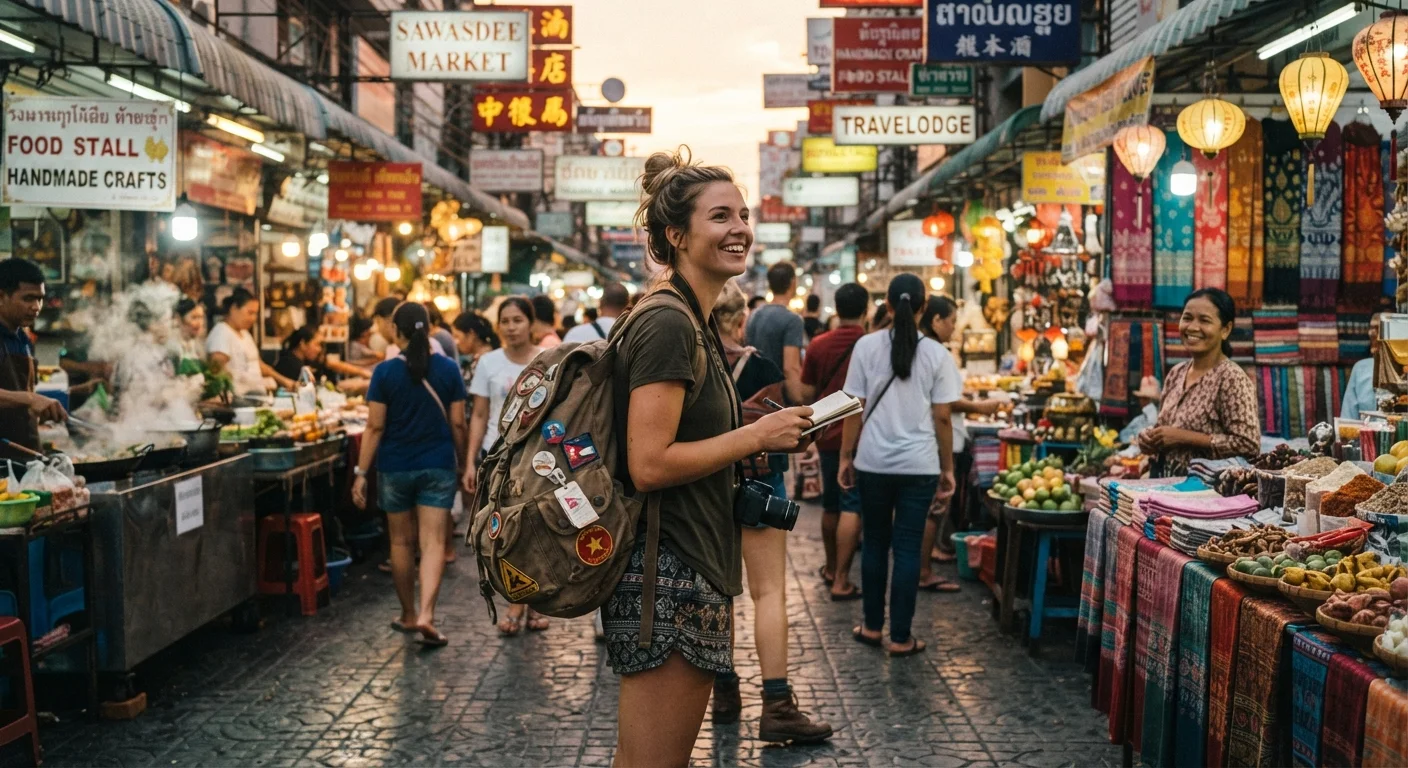
For daily spending, local markets, street food stalls, and neighborhood restaurants away from tourist centers offer both lower prices and often better food. Setting a daily cash allowance and withdrawing it in a single ATM transaction (rather than multiple small withdrawals with repeated fees) helps keep costs visible and controlled. Our guide on managing spending in high-cost cities extends these principles to expensive destinations like Tokyo and London.
Protecting Yourself Without Overspending
Budget travel and responsible travel are not opposites. Travel insurance is one area where skipping coverage to save money can backfire significantly. Medical evacuation from a remote international location, emergency hospitalization, or a cancelled trip due to illness can each generate costs that dwarf the price of a basic policy. Our dedicated guide on what travel insurance coverage actually matters breaks down which protections are worth prioritizing.
Beyond insurance, always verify entry requirements - visas, vaccinations, and any local regulations - through official government sources before you book anything. Requirements change, and relying on secondhand information or travel forums for visa rules carries real risk. The US Department of State's travel website and your destination country's official embassy pages are the authoritative starting points.
With destination chosen, fund saved, and logistics planned, your first international trip moves from daydream to calendar date. Start small, stay curious, and let the experience build your confidence for wherever the next adventure leads.