

Travel & Trips

Before You Leave: A Financial Prep Checklist for Budget Travelers

Share
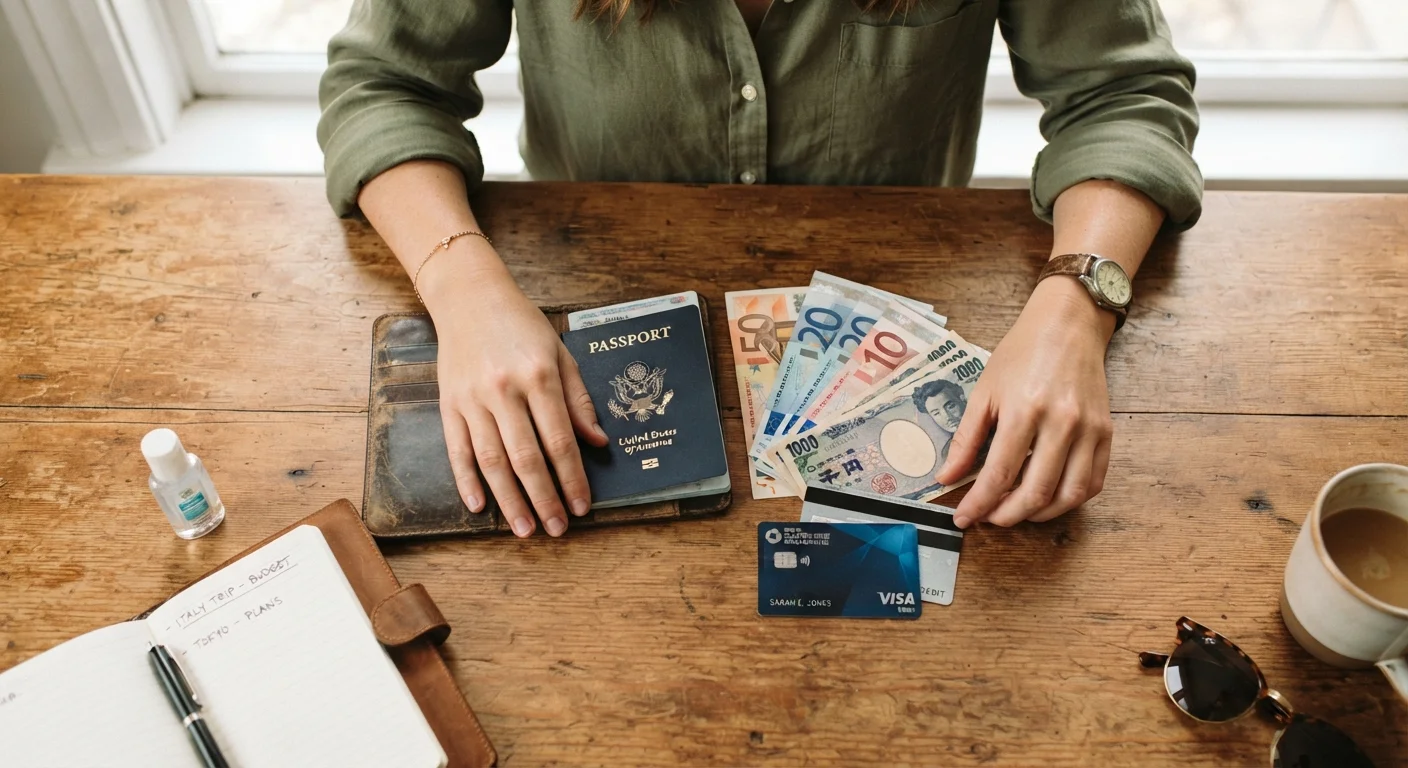
Traveler arranging passport, foreign currency, and credit card on a wooden desk before an international trip

Key Takeaways

Notifying your bank before departure prevents your cards from being frozen abroad at the worst possible moment.
ATM fees and foreign transaction charges can quietly drain your travel budget if you don't address them in advance.
Setting a realistic daily spending limit before you leave helps you stay on track without obsessing over every purchase.
Carrying a small amount of local currency on arrival saves you from high-fee airport exchange booths.
Storing backup payment methods separately protects you if a wallet is lost or a card is compromised.
Travel insurance is a financial safety net - understand what it covers before you need it.
30–60 min

Summary

18 items · 30-60 minutes

Why Financial Prep Deserves Its Own Checklist

Most travelers spend weeks planning itineraries, booking flights, and packing the perfect bag - then scramble through the financial side in the final 24 hours. That's exactly when costly mistakes happen: a card gets blocked overseas, an ATM charges a jaw-dropping fee, or a currency exchange booth quietly takes 8% off the top.

Budget travel isn't just about finding cheap flights. It's about protecting the dollars you've already set aside. The steps below don't take long - most of this checklist can be knocked out in a single focused hour - but they can meaningfully reduce how much money slips through the cracks once you're on the road.

If you're building your financial foundation from the ground up, our monthly budget setup checklist is a helpful companion before diving into trip-specific prep.

Cards & Banking

Notify your bank and each credit card issuer of your travel dates and destinations so your accounts aren't flagged for suspicious activity and frozen while you're abroad. Must
Identify which of your cards charge foreign transaction fees (typically 1-3%) and plan to use the card with the lowest or no fee as your primary payment method. Must
Check your card's ATM withdrawal policy - some cards reimburse third-party ATM fees globally, which can add up to meaningful savings on longer trips. Should
Confirm your PIN works at international ATMs; most international machines require a four-digit PIN with no letters. Must
Request a credit limit review if you anticipate larger expenses (hotels, car rentals, deposits) that could bump against your current limit. Nice to have

Cash & Currency

Order or withdraw a small amount of local currency before departure so you have cash on hand for taxis, tips, or vendors that don't accept cards on arrival. Should
Avoid airport currency exchange booths whenever possible - they typically offer the least favorable rates; use an in-network ATM at your destination instead. Should
Research the general exchange rate for your destination currency so you can quickly spot unfavorable conversion offers on the ground. Should
Keep a small emergency cash reserve (in local currency or US dollars) stored separately from your main wallet in case of theft or card issues. Must

Budget Planning

Set a realistic daily spending target for accommodation, meals, transport, and activities - and write it down or enter it into a budgeting app before you leave. Must
Build a 10-15% buffer into your total trip budget to absorb unexpected costs without stress. Should
Identify which categories of spending are flexible (dining, souvenirs) versus fixed (flights, accommodation already booked) so you know where to adjust if needed. Should
Review the everyday money tips that apply to travel spending - small habits like tracking daily totals can prevent end-of-trip budget shock. Nice to have

Protection & Backup

Carry at least two payment methods - ideally cards from two different networks (Visa and Mastercard, for example) - stored in separate locations in case one is lost or compromised. Must
Photograph or scan the front and back of all cards you're bringing and store those images securely (encrypted cloud folder or a trusted secure app) so you have account numbers if a card is stolen. Must
Save your bank's international collect call number in your phone - the toll-free number on the back of your card often doesn't work from abroad. Must
Review your travel insurance policy (or purchase one) and confirm it covers trip cancellation, emergency medical expenses, and lost or stolen belongings relevant to your destination. Should
Set up transaction alerts on your accounts so you receive real-time notifications of charges and can catch unauthorized activity quickly while traveling. Should

Tools That Make This Easier

You don't need fancy software to execute this checklist - but a handful of free resources make the process smoother and help you stay organized once you're traveling.

Required

Your bank's mobile app

Use it to set travel notifications, monitor real-time transactions, and freeze or unfreeze your card instantly if it goes missing.

Required

A currency converter app or website

Lets you check live exchange rates on the ground so you can evaluate whether a conversion offer is fair before agreeing to it.

Optional

A simple expense-tracking app

Helps you log daily spending against your preset budget so you can course-correct before you overshoot - no spreadsheet required.

Optional

A secure password manager or encrypted notes app

Stores card account numbers, emergency bank contacts, and copies of travel documents safely in case your physical wallet is lost or stolen.

The Costs That Catch Travelers Off Guard

Even travelers who complete every item on this checklist can get stung by charges they didn't see coming. Foreign transaction fees, dynamic currency conversion markups (always pay in local currency when given the choice), and resort or city tourism fees are among the most common budget-busters. Our article on hidden costs that quietly inflate a travel budget breaks these down in detail.

Never Accept 'Pay in Your Home Currency'

When paying by card abroad - at a restaurant, hotel, or ATM - you may be asked whether you want to pay in local currency or your home currency (US dollars). Always choose local currency. Paying in dollars triggers dynamic currency conversion, a process controlled by the merchant or ATM operator that almost always applies a less favorable exchange rate than your card network would use. This single habit can save you a noticeable amount on a multi-week trip.

For travelers heading abroad for the first time, the broader guide on planning a first international trip on a tight budget covers destination selection, accommodation choices, and everyday spending decisions that complement this financial prep checklist.

One area budget travelers sometimes skip: travel insurance. It may feel like an extra expense, but a single medical evacuation or trip cancellation can cost far more than the policy premium. Our breakdown of what travel insurance coverage actually matters helps you decide what level of protection makes sense for your trip - without paying for coverage you'll never use.

Don't Rely on a Single Payment Method

Cards can be blocked, cloned, or simply refused by certain merchants in some countries. Traveling with only one card and no backup cash is a genuine risk - not an unlikely scenario. Always enter a trip with at least two payment options stored in separate places, and keep a modest cash reserve that you don't touch unless it's truly needed.

This article is for general informational purposes only and does not constitute personalized financial or legal advice. For guidance tailored to your individual financial situation, consult a qualified financial professional. Always verify visa requirements, entry rules, and travel advisories with official government sources before departure.

Travel & Trips Editorial Team is the collective byline for our editorial team and contributor network. Articles published under this byline or an editorial pen name are researched, written, and reviewed according to our editorial standards for clarity, consistency, and independence before publication.

View all articles by Travel & Trips Editorial Team →
Disclaimer: The content provided on our blog site traverses numerous categories, offering readers valuable and practical information. Readers can use the editorial team’s research and data to gain more insights into their topics of interest. However, they are requested not to treat the articles as conclusive. The website team cannot be held responsible for differences in data or inaccuracies found across other platforms. Please also note that the site might also miss out on various schemes and offers available that the readers may find more beneficial than the ones we cover.