

Key Takeaways
Why Tourist-Trap Restaurants Are So Easy to Fall Into
It happens to nearly every traveler: you're tired, hungry, and slightly disoriented, and suddenly the laminated menu with photos outside a restaurant near a famous landmark seems like a lifeline. Tourist-trap restaurants survive on foot traffic and familiarity, not quality. They're optimized for a one-time customer who will never return - which means there's little incentive to earn your loyalty through food that's actually worth the price.
The good news is that escaping these traps is less about insider knowledge and more about a few reliable habits. Traveling in Europe or anywhere abroad on a tighter budget starts with recognizing that the best meals are almost always found one or two streets away from the main attraction - or at a completely different time of day. Our guide to budget travel across Europe goes deeper on this principle across many planning categories.
Best Practices for Eating Well Without Overpaying
These approaches work across destinations - from city street food scenes to small-town trattorias - and don't require any special apps or local connections to put into practice.
Eat lunch at sit-down restaurants instead of dinner whenever possible.
Many restaurants - especially in Europe and Latin America - offer a set lunch menu (called a 'menu del día' in Spain, 'prix fixe' in France) that includes multiple courses for a fraction of the dinner price. The kitchen, ingredients, and chef are the same; the savings are substantial.
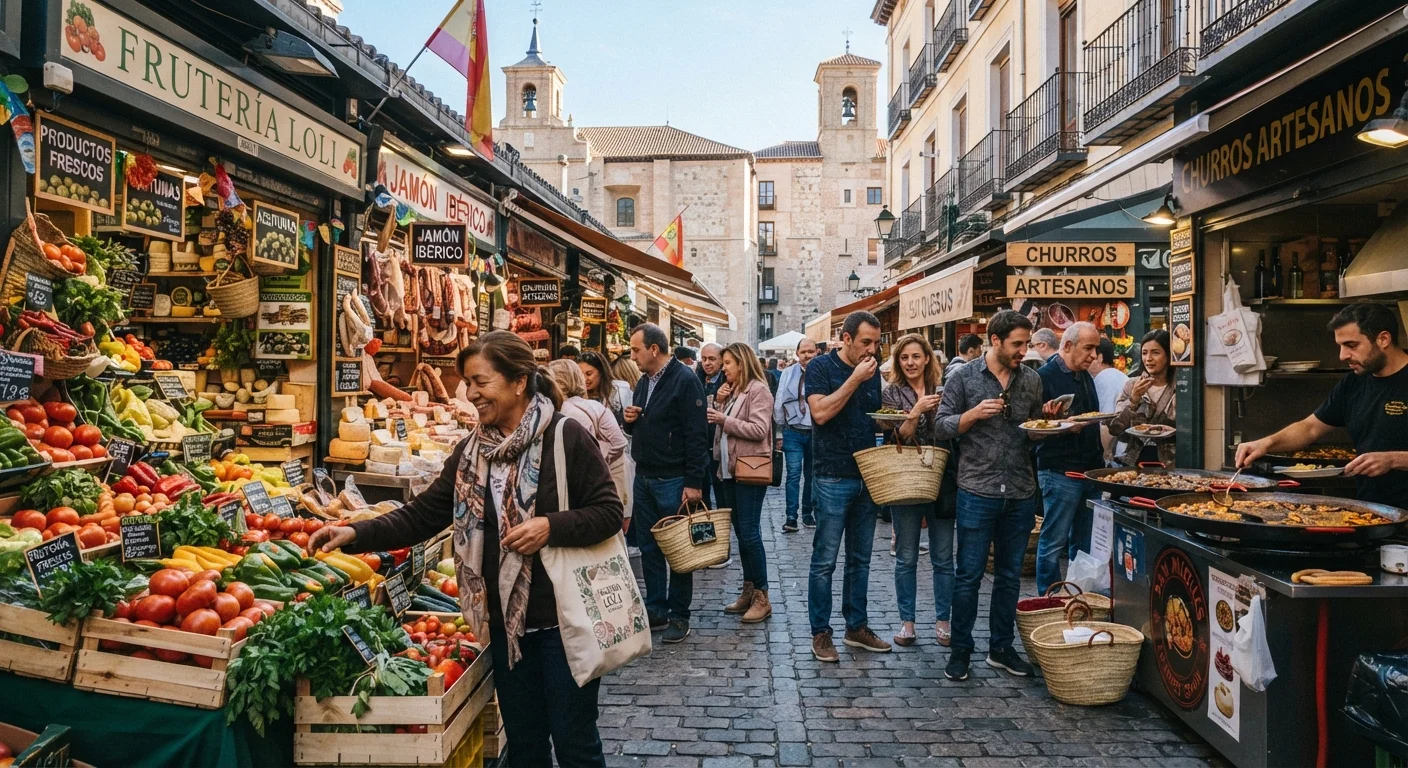
Head to local markets for at least one meal or snack per day.
Municipal food markets are where locals actually shop and eat. Vendors compete on quality and price, portions are generous, and you get the added benefit of seeing what's actually seasonal and regional. Markets also offer flexibility - you can assemble a full meal from multiple stalls.
Walk at least two blocks away from any major tourist landmark before choosing a restaurant.
Restaurants immediately adjacent to popular sites pay premium rents and rely on tourists who won't return. Even a short walk into a residential side street dramatically increases the chances of finding a place where locals actually eat.
Learn five to ten local food terms before you arrive.
Being able to read a menu - even partially - prevents defaulting to English-language tourist menus, which are almost always upcharged. It also signals to staff that you're engaging with the local culture, which often results in better recommendations and service.
Ask non-tourist-facing staff for recommendations - not hotel concierges at large hotels.
Concierges at tourist hotels often recommend restaurants with whom they have referral arrangements, not necessarily the best or most affordable options. Guesthouse owners, Airbnb hosts, and neighborhood café staff tend to give more authentic, budget-conscious suggestions.
Shop at local supermarkets for breakfast and light snacks.
Hotel breakfasts are among the most overpriced meals of any trip. Picking up yogurt, fruit, pastries, or bread from a nearby supermarket or bakery saves money without sacrificing quality - and often introduces you to local products you wouldn't otherwise try.
Quick Moves You Can Make Today (Before You Even Leave)
Preparation before your trip is underrated. A bit of research at home means you arrive with confidence rather than hungry desperation. These actions take minutes and pay off throughout your trip.
If you're already a savvy grocery shopper at home, many of those instincts translate well abroad. The grocery habits that reduce food costs article outlines principles that apply whether you're at a local supermarket in your hometown or navigating a foreign market stall.
Fitting Food Strategy Into Your Broader Travel Budget
Food spending is one of the most flexible line items in any travel budget - and one of the most rewarding places to be intentional. Eating one meal a day from a market or bakery instead of a sit-down restaurant can free up real money for experiences that matter more to you.
2-3×
Price premium at tourist-area restaurants
Travel researchers and food journalists have widely documented that restaurants near major tourist sites commonly charge two to three times the local average for comparable dishes.
40-60%
Typical savings on a set lunch vs. dinner
Set lunch menus across much of Europe and Latin America are commonly priced 40-60% below equivalent à la carte dinner menus at the same establishments.
This matters especially in high-cost cities like Tokyo, London, or New York, where restaurant prices at tourist-facing establishments can be dramatically inflated compared to what locals actually pay. Pairing a smart food approach with slower travel pacing also helps - staying in one neighborhood longer means you naturally discover the spots that regulars use.
This article provides general travel and food guidance for informational purposes. Always verify local conditions, food safety standards, and entry requirements with official sources before traveling.