

Key Takeaways
Why Subscription Creep Happens to Careful Spenders
Subscription creep doesn't target people who are careless with money. It happens to attentive, budget-conscious households because the individual amounts are designed to feel trivial. Eight dollars here, twelve dollars there - each charge clears a mental threshold below which we don't bother to question it.
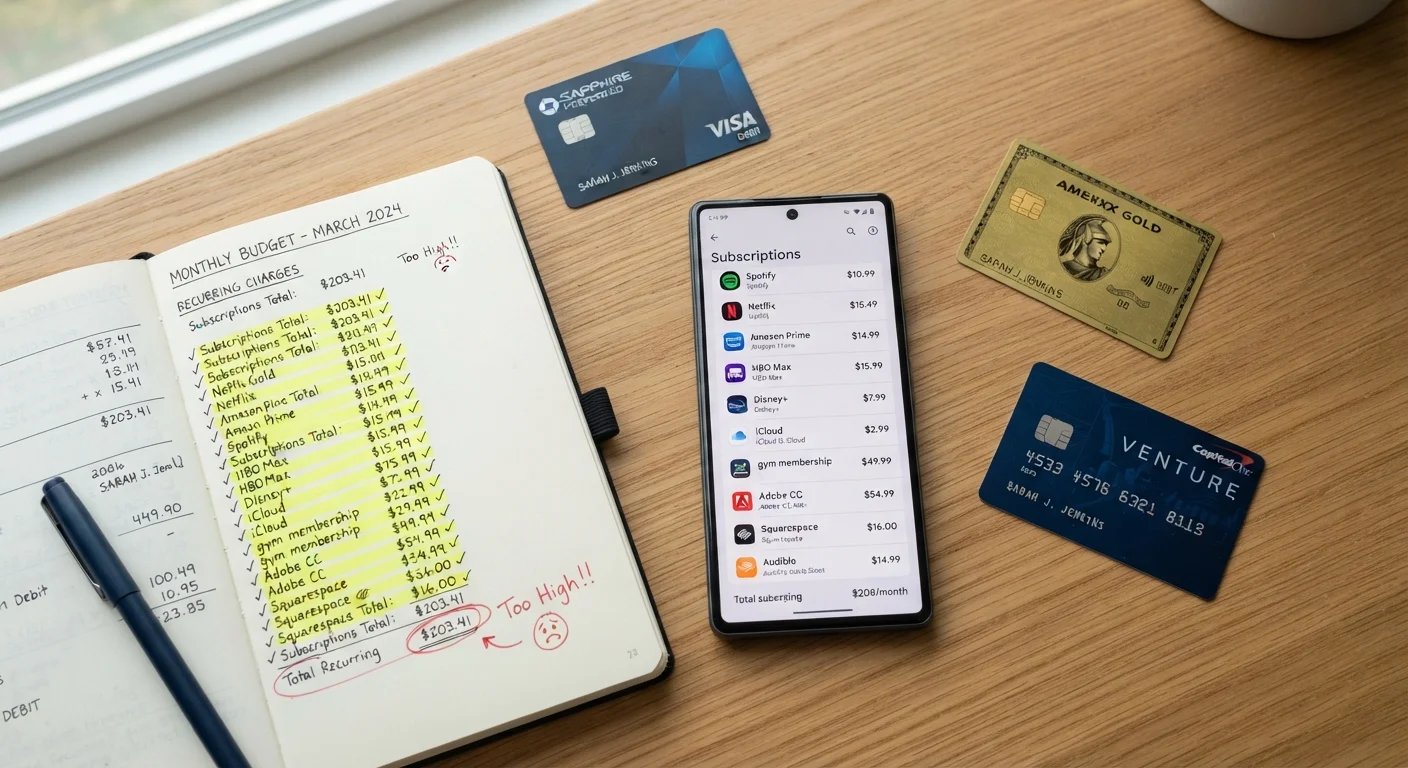
The cumulative effect is different. When those small charges are assembled in one place, the monthly total often surprises even people who consider themselves financially aware. Research has consistently found a large gap between what Americans think they spend on subscriptions and what they actually spend. That gap is the cost of not looking.
Subscription models have also become the default for software, entertainment, fitness, news, and dozens of product categories that were once one-time purchases. The sheer volume of available services makes it easy to accumulate them faster than you retire them. Understanding this dynamic is the first step toward reversing it - and tracking your spending without losing your mind is where that reversal begins.
$219/mo
Average U.S. household subscription spend
A C+R Research survey found Americans spend an average of around $219 per month on subscription services - roughly double what they estimate when asked.
84%
Consumers who underestimate subscription costs
The same C+R Research study found that 84% of respondents significantly underestimated their total monthly subscription spending.
The Most Common Subscription Mistakes - and How to Fix Them
The errors below aren't failures of discipline. They're predictable responses to how subscription services are structured and marketed. Recognizing the pattern makes it easier to interrupt it.
Estimating your subscription total from memory rather than reviewing actual statements.
Why it happens: People tend to recall only the subscriptions they use frequently. Services used occasionally - or not at all - fade from mental accounting even while the charges continue.
Spreading subscriptions across multiple payment methods, making the full picture invisible.
Why it happens: Subscriptions accumulate across different cards, PayPal accounts, and app store billing systems over months or years. No single statement shows everything.
Keeping a subscription active "just in case" or because canceling feels like effort.
Why it happens: Cancellation friction is intentional - services make it inconvenient to leave, and the monthly cost feels small enough to defer the decision indefinitely.
Ignoring annual subscriptions because they don't show up monthly.
Why it happens: Annual billing cycles are easy to forget. When the renewal charge appears, many people assume it's legitimate and move on without questioning whether the service still has value.
Letting free trial periods quietly convert to paid subscriptions.
Why it happens: Sign-up flows are optimized to minimize awareness of the billing start date. The trial feels free, so the charge later comes as a surprise.
Free Trials Automatically Become Paid Plans
Many services require a credit card to start a free trial and convert automatically on a set date - often with little or no reminder. If you sign up for a trial you don't intend to keep, mark the cancellation deadline in your calendar the same day you sign up. Waiting until you notice the charge on your statement can cost you one or more billing cycles.
Building a Habit That Keeps Subscriptions in Check
A one-time audit is useful. A recurring habit is what prevents the problem from returning. The most practical approach is a quarterly review - ideally tied to something you already do, like reviewing your credit card statement at the end of each month.
During each review, list every recurring charge you find and ask three questions: Do I use this? Do I get clear value from it relative to the cost? Is there a free or lower-cost alternative that would serve the same purpose? Any subscription that fails two out of three gets canceled or downgraded.
This habit pairs naturally with building a budget that reflects your actual life - because a budget built on estimated subscription costs is quietly inaccurate from day one. Subscriptions are also worth reviewing alongside other recurring household expenses; a room-by-room spending audit can surface charges in categories you might not think to check.
The goal isn't to eliminate subscriptions entirely - many deliver genuine value. The goal is intentionality: paying for what you use, and noticing when that changes. Freed-up subscription spending can be redirected toward savings goals, debt repayment, or simply reducing financial pressure - no dramatic lifestyle changes required.
This article is for general informational and educational purposes only and does not constitute personalized financial advice. Consult a qualified financial professional for guidance specific to your situation.