

Key Takeaways
Why Most Spending Tracking Fails - and How to Avoid It
Spending tracking fails for a predictable reason: people build systems that are too complicated to maintain past the first week. Color-coded spreadsheets with 30 categories, daily logging requirements, and manual receipt entry all add up to a system that demands more effort than the insight it delivers. The fix is not more discipline - it's a simpler system.
The practical goal of tracking is awareness, not audit-level accuracy. Knowing that you spent roughly $600 on food last month - and that it was $150 more than the month before - is genuinely useful. Knowing the exact breakdown down to the dollar is usually not. That distinction changes how you should design your system from the start.
Tracking Is Information, Not Judgment
The point of tracking spending is to understand where your money goes - not to shame yourself for past choices. When you see a category that surprises you, treat it as useful data, not a verdict. That mindset shift is what keeps most people going past the first week.
For a deeper look at structuring spending by category, the household spending audit offers a category-by-category framework that pairs well with regular tracking.
Start With One Month of Bank Statements
Before building any new habit, pull your last 30 days of transactions from your bank or credit card and sort them manually by category. This one-time exercise gives you a real baseline - and often reveals surprises - without requiring any new tools or ongoing commitment.
Setting Up Your Tracking System
Before you log a single transaction, gather what you need and choose your tools.
What you will need
Once you have those in place, you are ready to work through the steps below. The entire initial setup should take under an hour.
Bank or credit card statements
Provides a complete, accurate record of every transaction in a given period.
Notebook or printed expense sheet
A low-tech way to log and categorize spending by hand for those who prefer pen and paper.
Spreadsheet software (e.g., Google Sheets or Excel)
Allows you to organize categories, run totals automatically, and spot trends over time.
Personal finance app
Automates transaction import and categorization, reducing the manual effort of tracking.
Choose a tracking method that fits your life
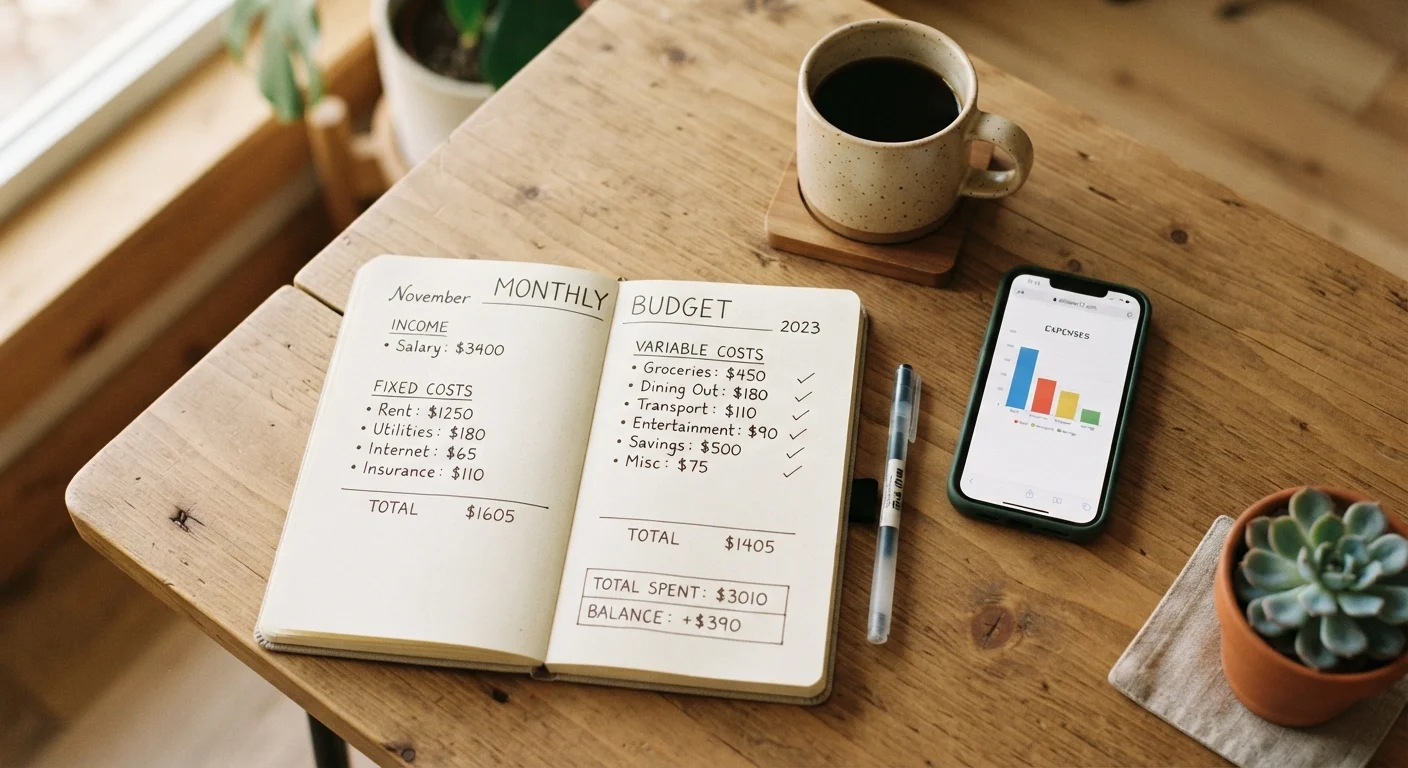
There is no universally correct way to track spending. A handwritten ledger, a simple spreadsheet, or a dedicated app can all work - the key is picking the approach you will realistically use every week. If you enjoy analog systems, a small notebook works fine. If you want automation, an app that connects to your accounts removes most of the manual effort. See a fuller breakdown of trade-offs in paper ledgers, spreadsheets, and apps before committing.
Define a short list of spending categories
Granular categories create friction. Start with five to eight broad buckets: housing, food, transportation, utilities, personal care, entertainment, savings, and everything else. You can always add detail later once the habit is established. If you use the 50/30/20 framework - needs, wants, and savings - those three top-level categories alone are enough to start.
Log or review transactions at least once a week
A single weekly session of 10 minutes is far more sustainable than trying to remember an entire month at once. Pick a consistent day - many people find Sunday evening or Monday morning works well - and simply assign each transaction to a category. If you use an app, this session is largely a review-and-correct exercise since categorization often happens automatically.
Flag subscriptions and recurring charges separately
Recurring charges are among the most overlooked budget leaks. During your weekly review, mark any automatic charge - streaming, software, gym memberships, app subscriptions - and total them monthly. Many households find this number is significantly higher than expected. The subscription creep article walks through a practical audit if you want a structured approach.
Do a monthly category review
At the end of each month, add up your category totals and compare them to the prior month and to your income. You are looking for two things: categories that consistently exceed what you expected, and any category where you have no idea what you spent. Those are the areas worth investigating next. This is also when your savings rate becomes visible - what percentage of take-home pay actually stayed in your account.
Adjust your approach as needed - not your ambition
If your system feels burdensome after a month, simplify it rather than abandoning it. Drop a category, switch tools, or shorten your weekly session. The goal is durable awareness, not accounting-grade precision. When your tracking habit is stable, you will have the information you need to move to a fuller monthly budget setup using a resource like the monthly budget setup checklist.
Don't Let Perfect Be the Enemy of Done
Many people abandon spending tracking because they miss a few transactions and feel like the whole record is ruined. It isn't. An 85% accurate picture of your spending is vastly more useful than no picture at all. Keep going even when you miss something.
When your tracking habit is running smoothly, consider using it as the foundation for a more comprehensive plan. The guide to building a realistic budget covers how to translate spending awareness into durable, flexible financial planning.
This article is for general informational and educational purposes only and does not constitute personalized financial advice. Consult a qualified financial professional for guidance specific to your situation.