

Key Takeaways
Option A
The 50/30/20 Rule
The flexible, percentage-based approach for big-picture thinkers.
Best for: People who want simple guardrails without tracking every purchase in detail.
Option B
Envelope Budgeting
The hands-on, category-by-category method for detail-oriented spenders.
Best for: People who overspend in specific categories and need firm, visible spending limits.
If you want a simple, low-maintenance budgeting system
The 50/30/20 Rule
Three broad categories require minimal tracking, making it easy to maintain without daily effort or detailed recordkeeping.
If you consistently overspend on dining, shopping, or entertainment
Envelope Budgeting
Physical or digital envelopes create a firm ceiling for problem categories, stopping overspending at the source.
If you have irregular income from freelancing or seasonal work
Envelope Budgeting
Allocating a variable paycheck into fixed envelopes each month helps manage unpredictability category by category.
If you're new to budgeting and want to start without overwhelm
The 50/30/20 Rule
Its broad structure gives beginners a workable framework without requiring a full audit of every spending category.
If you're aggressively paying down debt or saving for a major goal
Envelope Budgeting
Granular category limits free up more discretionary cash that can be redirected toward debt payoff or a savings target.
How Each Framework Actually Works
Before comparing them head-to-head, it helps to understand what each method asks of you in practice.
The 50/30/20 rule divides your monthly after-tax income into three broad buckets: 50% toward needs (housing, utilities, groceries, minimum debt payments), 30% toward wants (dining out, subscriptions, hobbies), and 20% toward savings and debt repayment beyond minimums. You're not tracking every line item - you're checking that your spending roughly lands in each zone. For a deeper dive into how the percentages scale with your income, see our guide to percentage-based budgeting.
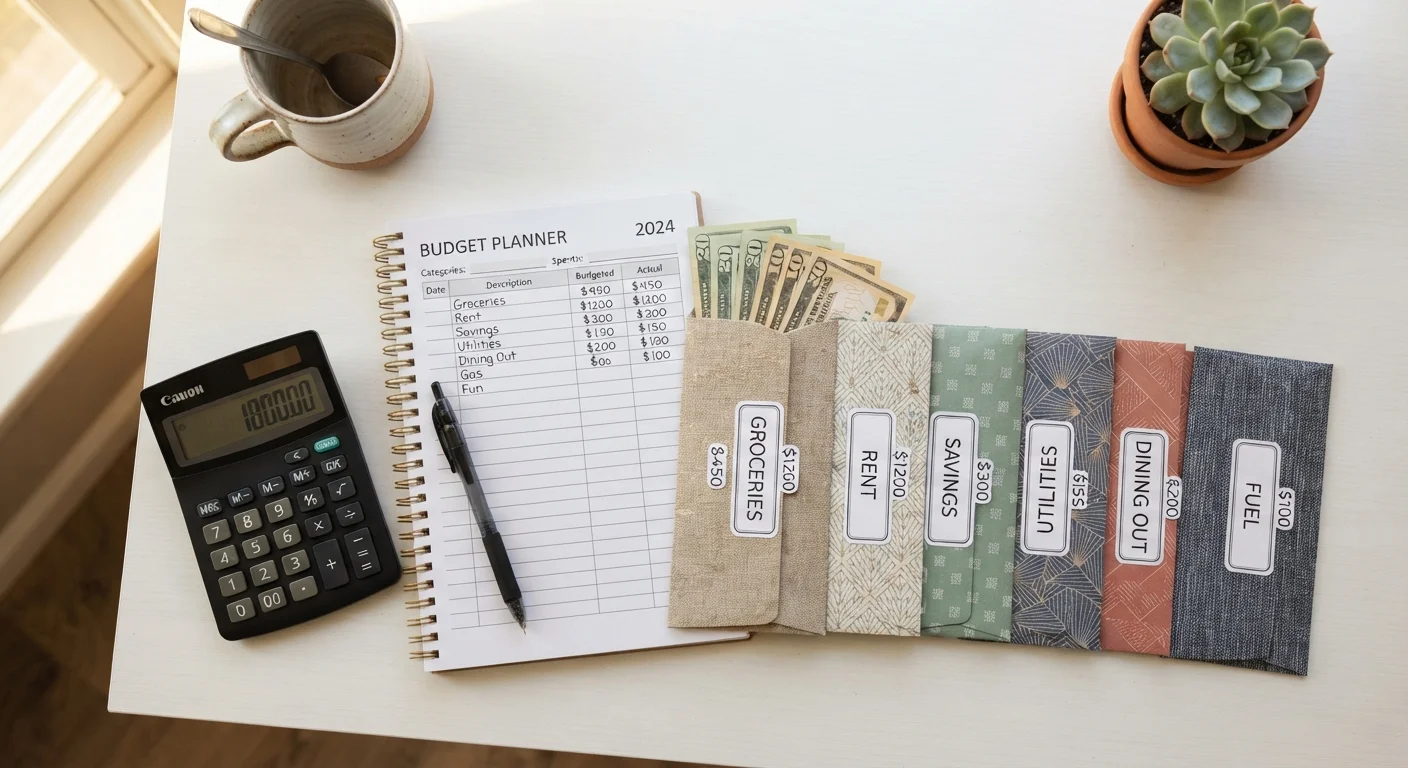
Envelope budgeting works differently. You allocate a specific dollar amount to each spending category at the start of the month - groceries, gas, restaurants, clothing, and so on. Traditionally, you'd stuff cash into physical envelopes; once an envelope is empty, spending in that category stops. Many people now use digital apps that replicate the same logic without the cash. The method traces back to long before personal finance apps existed, but it remains highly effective precisely because it makes limits tangible and immediate.
| Criterion | 50/30/20 Rule | Envelope Budgeting |
|---|---|---|
| Number of categories | 3 broad buckets | 10-20+ specific categories |
| Tracking intensity | Low - monthly check-ins | High - per-transaction awareness |
| Works with credit cards | Yes, easily | Harder; designed for cash |
| Best income type | Stable, predictable income | Any income, including irregular |
| Setup time | Minimal - under 30 minutes | Moderate - requires category planning |
| Controls category overspending | Loosely - broad limits only | Directly - hard category caps |
| Flexibility mid-month | High - easy to adjust | Lower - moving funds requires discipline |
| Learning curve | Very low | Moderate |
Where Each Method Struggles
No budgeting system is perfect for every household, and knowing the friction points of each can save you weeks of frustration.
The 50/30/20 rule's flexibility is also its weakness. If your housing costs alone consume 45% of take-home pay - a reality for many renters in high-cost cities - the math doesn't work cleanly, and the framework can feel discouraging rather than useful. The broad categories also make it easy to rationalize borderline spending as a "need" when it's actually a want.
Envelope budgeting demands more upfront work. You need to identify every meaningful spending category, decide on realistic monthly allocations, and actually check your envelopes before spending. If you share finances with a partner, coordination becomes essential. Cash-based envelopes also don't integrate easily with credit card rewards strategies, and moving money between envelopes mid-month - while sometimes necessary - can undermine the system's discipline.
When Neither Framework Fits Perfectly
If your essential expenses consistently exceed 50% of take-home pay, both systems may need adjustment before they're useful. In high cost-of-living areas, housing alone can skew any percentage-based rule. In those cases, consider starting with a zero-based budget - where every dollar gets assigned a job - and revisit percentage frameworks once your income or expenses shift. The Everyday Money Tips hub has additional approaches worth considering.
For a practical walkthrough of setting up either system from scratch, the Monthly Budget Setup Checklist covers income, expenses, and goals in a step-by-step format.
Choosing the Right Fit - or Combining Both
The honest answer is that both frameworks can work - the question is which one you'll actually stick with.
If you're someone who checks in on finances monthly rather than weekly, finds category-level tracking tedious, and generally keeps spending under control, the 50/30/20 rule provides enough structure without demanding constant attention. If you know you overspend in specific areas - restaurants, Amazon, clothing - envelope budgeting targets those leaks directly in a way that broad percentage buckets simply can't.
Some people run a hybrid: they use the 50/30/20 rule as a high-level sanity check, then apply envelope-style limits within the "wants" category where their spending tends to drift. This can offer the simplicity of one system with the precision of the other.
Whichever method you choose, the goal is the same: spending intentionally, saving consistently, and building financial stability over time. Explore how to build a budget that reflects your actual life for strategies that keep any framework durable beyond the first month. And if you're weighing other structured approaches, zero-based budgeting vs. envelope budgeting covers another common comparison worth reviewing.
This article is for general informational and educational purposes only and does not constitute personalized financial advice. Consult a qualified financial professional for guidance specific to your circumstances.