
Zero-Based Budgeting vs. Envelope Budgeting: Which Structure Suits Your Spending Style?

Key Takeaways
Option A
Zero-Based Budgeting
The meticulous, dollar-by-dollar planning system.
Best for: People who want complete visibility over every spending category and are comfortable building a monthly budget from scratch.
Option B
Envelope Budgeting
The hands-on, category-capped spending method.
Best for: People who struggle with overspending on variable categories and want a physical or visual limit that stops them in the moment.
If you earn a variable or irregular income
Zero-Based Budgeting
Rebuilding a budget from scratch each month lets you adapt your allocations to what you actually earned, rather than locking in fixed category caps that may not fit.
If you consistently overspend on dining, shopping, or entertainment
Envelope Budgeting
Hard category limits - especially with physical cash - create an immediate, tangible stop that digital tracking alone rarely delivers.
If you prefer a digital-first, spreadsheet-friendly approach
Zero-Based Budgeting
Zero-based budgeting translates naturally into apps and spreadsheets, making it easy to track and adjust without handling cash.
If you want a simple system with minimal monthly setup
Envelope Budgeting
Once you set your category amounts, envelope budgeting largely runs itself - you spend until the envelope is empty, then stop.
If you are working toward a specific savings goal or debt payoff
Zero-Based Budgeting
Assigning every dollar a job makes it straightforward to direct surplus income toward a goal category before discretionary spending can absorb it.
How Each System Actually Works
Both methods share a core philosophy: money should be allocated deliberately, not spent by default. But the mechanics are quite different.
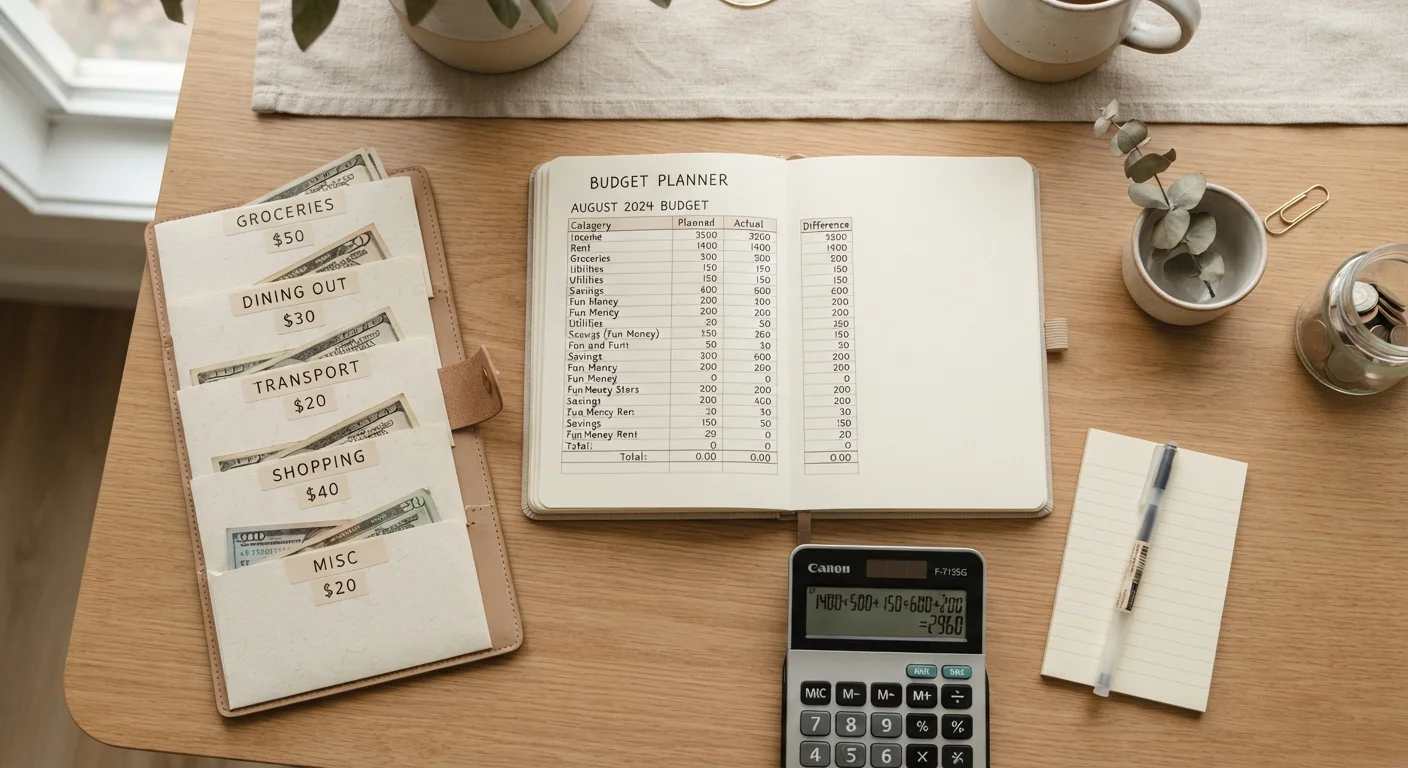
Zero-based budgeting starts with your total monthly income and subtracts planned expenses - bills, groceries, savings, debt payments, entertainment - until you reach zero. Every dollar is assigned to a category before the month begins. You can learn more about the underlying logic in our article Zero-Based Budgeting: Giving Every Dollar a Job.
Envelope budgeting takes a different angle. You divide your spending money into labeled envelopes - groceries, gas, dining out, clothing - and load each with a fixed cash amount. When an envelope is empty, spending in that category stops for the month. Digital versions of this method use virtual envelopes or sub-accounts in place of physical cash.
Understanding how fixed and variable expenses behave differently is useful background for either approach, since envelope budgeting tends to focus specifically on the variable categories where overspending most often happens.
| Criterion | Zero-Based Budgeting | Envelope Budgeting |
|---|---|---|
| Core mechanic | Assign every dollar a category until income = zero | Cap each spending category with a fixed cash amount |
| Setup effort | Higher - requires monthly planning session | Lower - set amounts once, refresh each cycle |
| Best expense type | All categories, including fixed costs and savings | Variable, discretionary spending categories |
| Income variability | Handles well - rebuild budget each month | Less flexible with irregular income |
| Digital-friendly | Yes - spreadsheets and apps work naturally | Possible, but physical cash delivers stronger discipline |
| Savings goal integration | Built in - savings is a named budget line | Requires a dedicated savings envelope |
| Mid-month flexibility | Easy - reallocate between categories | Limited - moving between envelopes undermines the system |
The Real Trade-Offs
Zero-based budgeting demands more upfront work. You need a reliable picture of your income and a willingness to plan every category - including irregular ones like car maintenance or annual subscriptions. The payoff is total clarity: you know exactly where each dollar is going and can adjust categories mid-month if circumstances change.
Envelope budgeting is simpler to maintain once set up, but it has real friction points. Carrying cash is less convenient than tapping a card, and digital envelope tools vary widely in how well they replicate that hard-stop discipline. It also doesn't naturally address savings goals or debt repayment unless you create dedicated envelopes for those purposes.
~33%
Americans with a detailed household budget
Gallup polling has consistently found that roughly one-third of U.S. adults maintain a detailed monthly budget, suggesting most people lack a structured spending plan of any kind.
~$1,500
Average monthly discretionary spending per U.S. household
Bureau of Labor Statistics Consumer Expenditure data shows substantial discretionary spending in categories like dining, entertainment, and clothing - the exact areas envelope budgeting targets.
Another factor is income stability. If your paycheck is consistent month to month, either method works well. If you freelance, work hourly, or have fluctuating income, zero-based budgeting's month-by-month rebuild gives you more adaptability. For a framework that scales automatically with income changes, percentage-based budgeting is worth comparing alongside both methods.
Choosing the Right Fit - or Combining Both
Neither method is universally superior. The better question is: which one you will actually stick with? A perfect budgeting system you abandon after three weeks produces worse outcomes than a good-enough system you follow for three years.
Some people find that a hybrid approach works well - using zero-based budgeting as the monthly planning framework, then applying envelope-style caps to the two or three categories where they habitually overspend. This captures the strategic overview of zero-based budgeting while adding the behavioral guardrails of envelopes where they matter most.
If you want guidance on building a budget that holds up over time - not just in the first week of enthusiasm - Building a Budget That Reflects Your Actual Life walks through how to make any system durable and honest. The Budgeting Basics hub also has additional frameworks worth exploring if neither of these feels like the right fit.
This article is for general informational purposes only and does not constitute personalised financial advice. Consider consulting a qualified financial professional for guidance tailored to your specific situation.