

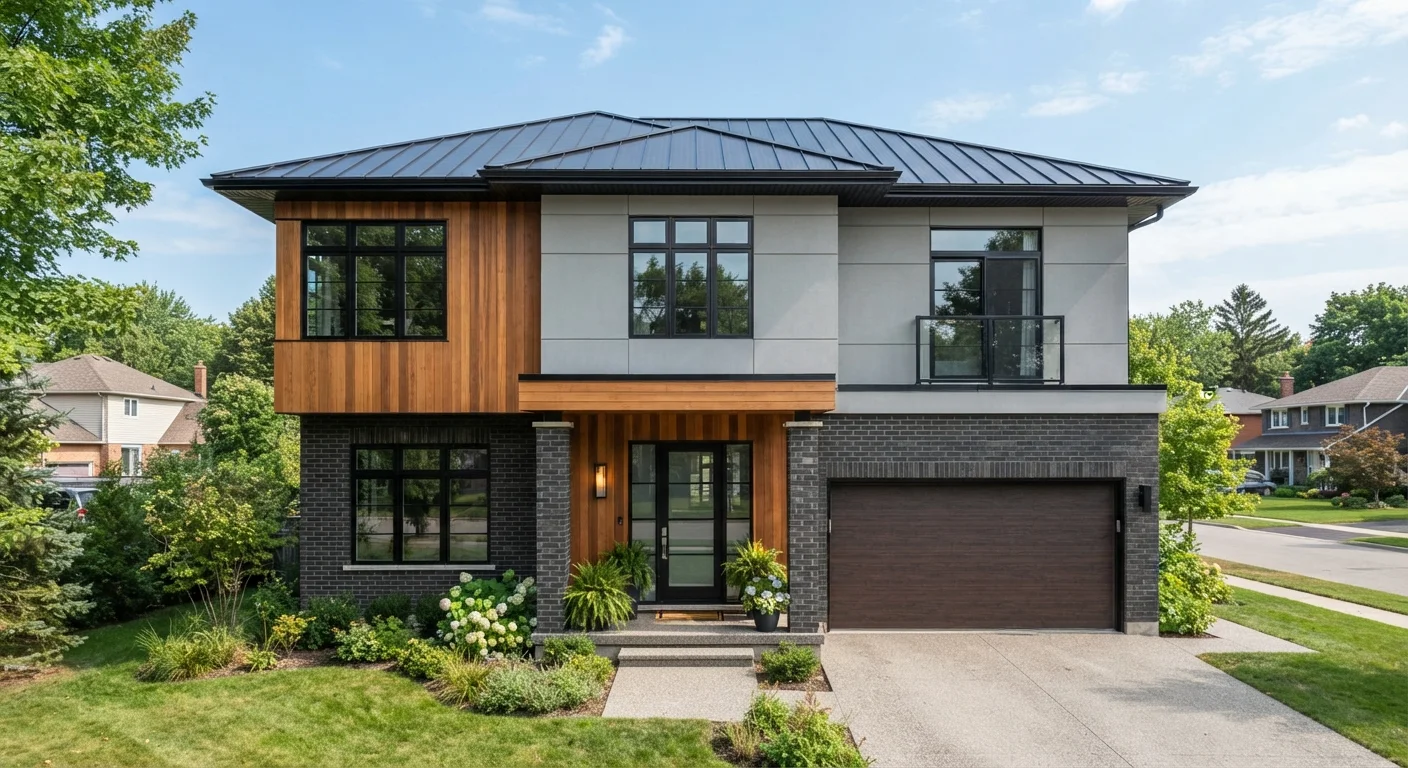
Key Takeaways
Our Verdict
No single exterior cladding material wins outright - performance depends heavily on your climate, budget, and willingness to maintain it. Fiber cement stands out as a balanced middle ground for most American homeowners, offering durability and design flexibility without the extreme demands of wood or the limitations of vinyl. Brick and stone veneer remain the gold standard for longevity where budget allows.
| Best for | Recommended |
|---|---|
| Budget-conscious homeowners wanting low ongoing maintenance | Vinyl siding |
| Homeowners wanting durability with design flexibility | Fiber cement |
| Those prioritizing classic aesthetics and willing to maintain | Wood cladding |
| Long-term investment buyers seeking maximum lifespan | Brick or stone veneer |
Why Cladding Choice Has Long-Term Consequences
Exterior cladding is one of the most consequential decisions a homeowner makes - it shapes curb appeal, energy efficiency, weather resistance, and decades of maintenance costs all at once. Unlike interior renovations that can be updated affordably, re-cladding an entire home is a major project. Getting it right the first time (or understanding what you already have) is worth serious thought.
The four materials that dominate American residential construction are vinyl, fiber cement, wood, and brick or stone veneer. Each behaves very differently as it ages, and each has a climate profile where it shines - or struggles. Just as flooring decisions involve weighing real-world performance against aesthetics (similar comparisons arise when evaluating engineered versus solid hardwood flooring), cladding choices demand the same honest evaluation.
Vinyl Siding: Affordable but Not Indestructible
Vinyl is the most widely installed siding in the U.S., and for good reason: it's relatively inexpensive, comes in a wide range of colors and profiles, and requires no painting. A routine rinse with a garden hose handles most cleaning.
That said, vinyl has real limitations. In regions with prolonged freezing temperatures, it can become brittle and crack on impact. Sustained UV exposure causes gradual color fading that worsens in the South and Southwest. Once a vinyl panel discolors significantly or warps, matching replacement panels can be difficult if the product line has been discontinued.
Realistic lifespan: 20-40 years, depending on climate and installation quality. Insulated vinyl variants perform better in temperature extremes and add modest R-value to the wall assembly.
Watch for Improper Vinyl Installation
Vinyl siding must be installed with expansion gaps to allow for seasonal movement. Panels nailed too tightly will buckle in summer heat and crack under winter stress. If you're inspecting an existing installation or overseeing new work, confirm that installers are following the manufacturer's nailing specifications - this single detail dramatically affects long-term performance.
Fiber Cement: The Workhorse Option
Fiber cement - a composite of cement, sand, and cellulose fibers - has become the go-to upgrade from vinyl for homeowners who want better durability without the cost of masonry. It resists rot, insects, and fire, and holds paint exceptionally well.
The trade-off is maintenance that's more involved than vinyl: fiber cement should be repainted every 10-15 years depending on sun exposure, and caulked joints need periodic inspection. It also absorbs moisture at cut edges if not properly sealed during installation, so professional installation matters considerably here.
Overall lifespan: 50+ years with appropriate upkeep. It performs well across most U.S. climate zones and is a strong choice in coastal or humid regions where wood would struggle.
Ask About Pre-Primed or Pre-Painted Panels
Many fiber cement manufacturers offer factory-primed or factory-painted panels. These finishes are applied under controlled conditions and typically last longer than field-applied paint. Requesting pre-finished panels can meaningfully extend the interval between repaints and reduce your long-term maintenance workload.
Wood Cladding: High Appeal, High Commitment
Wood - whether lap siding, shingles, or board-and-batten - delivers a warmth and authenticity that manufactured materials still struggle to replicate. In dry, mild climates like the Pacific Northwest highlands or parts of New England, properly maintained wood cladding can last 20-30 years before replacement; cedar and redwood are particularly rot-resistant species.
The honest reality: wood requires painting or staining every 3-7 years, prompt attention to any cracked caulk or peeling finish, and regular inspection for insect damage. In humid Gulf Coast climates or areas with freeze-thaw cycles, maintenance intervals shrink and rot risk climbs. Wood is a rewarding choice for owners who treat maintenance as stewardship - and a costly mistake for those who don't.
Brick and Stone Veneer: Built to Outlast Everything Else
Solid brick and stone veneer occupy a different category entirely. Genuine brick - kiln-fired clay units set in mortar - can last well over 100 years with virtually no surface maintenance beyond periodic tuckpointing (repointing deteriorated mortar joints every 25-50 years). It's dimensionally stable, fire-resistant, and largely impervious to insects.
Stone veneer (thin cut or manufactured stone applied over a substrate) offers a similar aesthetic at lower cost and weight, though its longevity depends heavily on the quality of the substrate waterproofing and installation. Both options carry a higher upfront cost than wood or fiber cement, but the reduced lifetime maintenance burden can offset that over a long ownership horizon.
One consideration: brick's thermal mass performs well in mixed climates but can be a liability in extremely cold regions unless the wall assembly includes adequate insulation behind it.
| Vinyl | Fiber Cement | Wood | Brick / Stone Veneer | |
|---|---|---|---|---|
| Typical Lifespan | 20-40 years | 50+ years | 20-30 years | 75-100+ years |
| Maintenance Level | Very low | Moderate (repainting) | High (frequent finishing) | Very low (tuckpointing only) |
| Relative Installed Cost | Lower | Moderate | Moderate-Higher | Higher |
| Fire Resistance | Poor | Excellent | Poor-Moderate | Excellent |
| Moisture Resistance | Good | Good (if sealed) | Variable by species | Excellent |
| Climate Flexibility | Struggles in extreme cold | Most climates | Best in dry climates | Most climates |
| DIY-Friendliness | Moderate | Lower (heavy, precise) | Moderate | Low (professional required) |