

Key Takeaways
Significantly lower cost than full replacement
Refacing typically costs 40-60% less than installing new cabinets, making it accessible for homeowners working with a tighter renovation budget.
Faster project timeline with less disruption
Most refacing jobs complete in two to four days, meaning your kitchen remains largely functional throughout and household routines are minimally interrupted.
Less construction waste generated
Because the existing boxes stay in place, refacing produces far less debris than a full tear-out, which is both environmentally and logistically easier to manage.
Wide range of style and finish options
Modern refacing suppliers offer diverse door profiles, veneers, and finishes that can produce a result visually indistinguishable from new cabinetry in many kitchens.
Generally does not require building permits
Because structural work is not involved, refacing usually sidesteps the permit process - though homeowners should always verify with their local building department.
Cannot fix a poor or outdated layout
Refacing leaves cabinet positions exactly as they are. If the kitchen layout is inefficient or storage capacity is inadequate, the underlying problem persists after the job is done.
Unsuitable over damaged or deteriorated boxes
Water damage, mold, warping, or pest damage in the existing cabinet boxes makes refacing a cosmetic cover-up rather than a real fix - replacement is necessary in these cases.
Interior storage systems remain limited
New cabinets come with modern drawer configurations, pull-out shelves, and organizational inserts built in; refacing keeps the older interior dimensions and fittings unless costly retrofits are added.
Higher upfront cost and longer project timeline
Full replacement involves more labor, material, and time - often one to three weeks - and the associated disruption to daily kitchen use can be significant for households.
More complex coordination required
Replacement commonly involves countertop removal, plumbing disconnection, and drywall patching, which means coordinating multiple trades and managing a longer project sequence.
Our Verdict
Cabinet refacing is a sound, cost-effective choice when the existing box structure is solid and the layout works for your household. Full replacement offers greater design flexibility and is the right call when cabinets are damaged, the layout is inefficient, or you're undertaking a whole-kitchen renovation anyway. Neither option is universally superior - the decision hinges on the condition of what's already there and how much change you actually need.
Refacing suits homeowners with sound cabinet boxes who want a refreshed look on a tighter budget; replacement suits those ready for a full kitchen overhaul or dealing with structurally compromised cabinetry.
What Each Option Actually Involves
Understanding what happens during each process makes the comparison far more concrete than a simple price comparison.
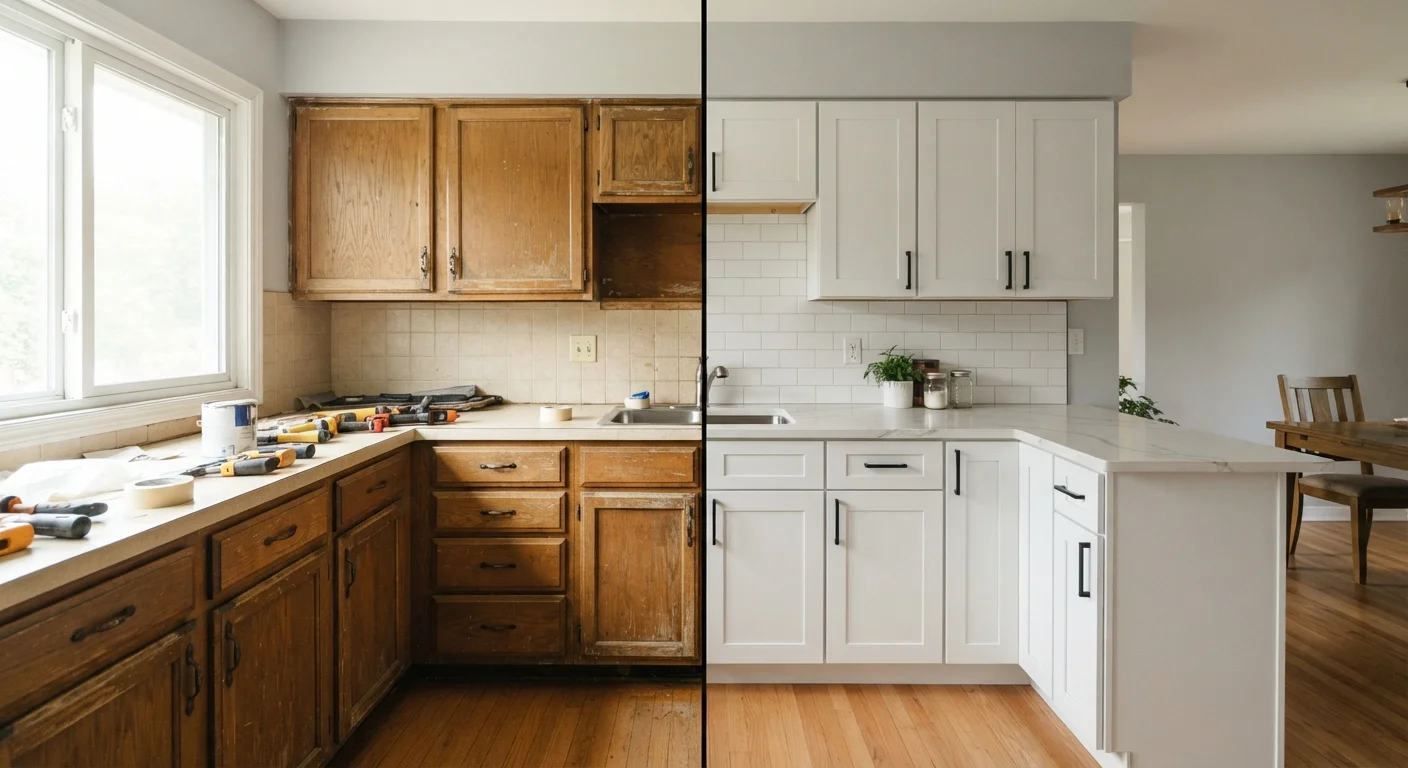
Cabinet refacing leaves the existing cabinet boxes - the carcasses attached to your walls - completely in place. A contractor removes only the doors and drawer fronts, then applies a thin veneer (wood, laminate, or thermofoil) over the exposed face frames and box sides. New doors and drawer fronts matching your chosen style are installed, along with fresh hardware. The result looks like new cabinetry, but the underlying structure is unchanged.
Full replacement means tearing out everything: doors, frames, boxes, and all. New cabinet units are ordered, delivered, and installed from scratch. This process typically requires disconnecting plumbing under the sink, removing the countertop, and patching drywall - a considerably more involved job. For a broader look at sequencing this kind of work within a larger project, see our complete home renovation planning guide.
The Case for Refacing
Significantly lower cost than full replacement
Refacing typically costs 40-60% less than installing new cabinets, making it accessible for homeowners working with a tighter renovation budget.
Faster project timeline with less disruption
Most refacing jobs complete in two to four days, meaning your kitchen remains largely functional throughout and household routines are minimally interrupted.
Less construction waste generated
Because the existing boxes stay in place, refacing produces far less debris than a full tear-out, which is both environmentally and logistically easier to manage.
Wide range of style and finish options
Modern refacing suppliers offer diverse door profiles, veneers, and finishes that can produce a result visually indistinguishable from new cabinetry in many kitchens.
Generally does not require building permits
Because structural work is not involved, refacing usually sidesteps the permit process - though homeowners should always verify with their local building department.
Refacing shines when your kitchen layout functions well and the cabinet boxes themselves are in good condition - no water damage, no warping, no pest intrusion. The process is faster (often completed in two to four days versus one to three weeks for replacement), produces significantly less construction debris, and puts far less stress on the household during the project. Cost savings are substantial: refacing generally runs 40-60% less than full replacement for a comparable kitchen footprint.
Style options have expanded considerably. Refacing suppliers now offer a wide range of door profiles, finishes, and veneer materials, so the visual outcome can closely rival new cabinetry. If you're also reconsidering your overall storage philosophy, it's worth reading our comparison of open shelving versus closed cabinets before committing to any door style.
The Case for Full Replacement
Cannot fix a poor or outdated layout
Refacing leaves cabinet positions exactly as they are. If the kitchen layout is inefficient or storage capacity is inadequate, the underlying problem persists after the job is done.
Unsuitable over damaged or deteriorated boxes
Water damage, mold, warping, or pest damage in the existing cabinet boxes makes refacing a cosmetic cover-up rather than a real fix - replacement is necessary in these cases.
Interior storage systems remain limited
New cabinets come with modern drawer configurations, pull-out shelves, and organizational inserts built in; refacing keeps the older interior dimensions and fittings unless costly retrofits are added.
Higher upfront cost and longer project timeline
Full replacement involves more labor, material, and time - often one to three weeks - and the associated disruption to daily kitchen use can be significant for households.
More complex coordination required
Replacement commonly involves countertop removal, plumbing disconnection, and drywall patching, which means coordinating multiple trades and managing a longer project sequence.
Replacement earns its higher price tag in specific situations. If your current layout is inefficient - cabinets in the wrong place, inadequate storage depth, or an island that doesn't exist but should - refacing cannot fix any of that. Only pulling everything out and starting fresh gives you full control over placement, cabinet depth, interior fittings, and height.
Replacement is also the responsible choice when the existing boxes show signs of water damage, mold, or structural failure. Applying new veneer over a compromised box creates a cosmetic fix over a real problem. A qualified contractor or inspector can assess box condition before you commit to either path.
Permits and Licensed Trades
Full cabinet replacement that involves relocating plumbing, gas lines, or electrical outlets will likely require permits and licensed tradespeople in most U.S. jurisdictions. Even straightforward replacement jobs can trigger permit requirements depending on your municipality. Always contact your local building department before work begins - requirements vary widely by location, and unpermitted work can create complications when selling a home.
Finally, if a full kitchen renovation is already underway - new flooring, new countertops, moving plumbing - the incremental cost of replacement cabinets is easier to justify within the total project budget.
Key Factors That Drive the Decision
Run through these practical checkpoints before choosing a direction:
- Box condition: Open a cabinet door and inspect the interior corners and base for soft spots, discoloration, or swelling. Any of these signals water damage that refacing won't address.
- Layout satisfaction: Does the current arrangement meet your storage and workflow needs? If the answer is mostly yes, refacing is viable. If you consistently wish things were elsewhere, plan for replacement.
- Budget ceiling: Refacing is the lower-cost path, but costs vary by material choice and kitchen size. Get itemized estimates for both options before assuming one is out of reach.
- Timeline tolerance: Refacing causes less household disruption. Replacement can leave a kitchen unusable for a week or more.
- Permits and codes: Refacing generally doesn't require permits. Replacement work - especially if it involves moving plumbing or electrical - often does. Always verify requirements with your local building department before work begins.
40-60%
Typical cost savings with refacing over replacement
Industry estimates consistently place refacing costs at roughly half the price of full cabinet replacement for a comparable kitchen size.
2-4 days
Average refacing project duration
Professional refacing contractors generally complete a standard kitchen in two to four days, compared to one to three weeks for a full replacement installation.