

Key Takeaways
Summary
22 items · 2-5 hours depending on yard size
Why Spring Cleanup Matters More Than You Think
After months of frost, wind, and wet weather, your yard is carrying a backlog of work. Matted leaves smother emerging grass. Dead stems harbor overwintering insects and fungal spores. Compacted soil left from autumn foot traffic resists the rain and root growth that spring demands. Tackling these issues methodically at the start of the season - rather than reactively throughout it - pays dividends all the way through fall.
This checklist is organized by zone and task type so you can work through your yard in a logical order. Adjust the sequence to your climate: gardeners in the upper Midwest and Northeast will need to wait a few weeks longer than those in the mid-Atlantic or Pacific Northwest. A general rule of thumb is to begin outdoor cleanup once nighttime temperatures consistently stay above freezing and the top inch or two of soil has thawed.
For larger, longer-term planning that picks up where cleanup leaves off, see our guide to garden planning decisions that pay off over time.
General Yard Assessment
Debris and Dead Material Removal
Pruning and Plant Care
Lawn Care
Garden Bed Preparation
Irrigation and Tools
Tools and Supplies to Have on Hand
Before you dig in, gather your equipment. Hunting for a trowel mid-project or discovering your pruners are rusted shut wastes time and momentum. Lay everything out and do a quick inspection - sharpen blades, replace broken handles, and restock any supplies that ran out last season.
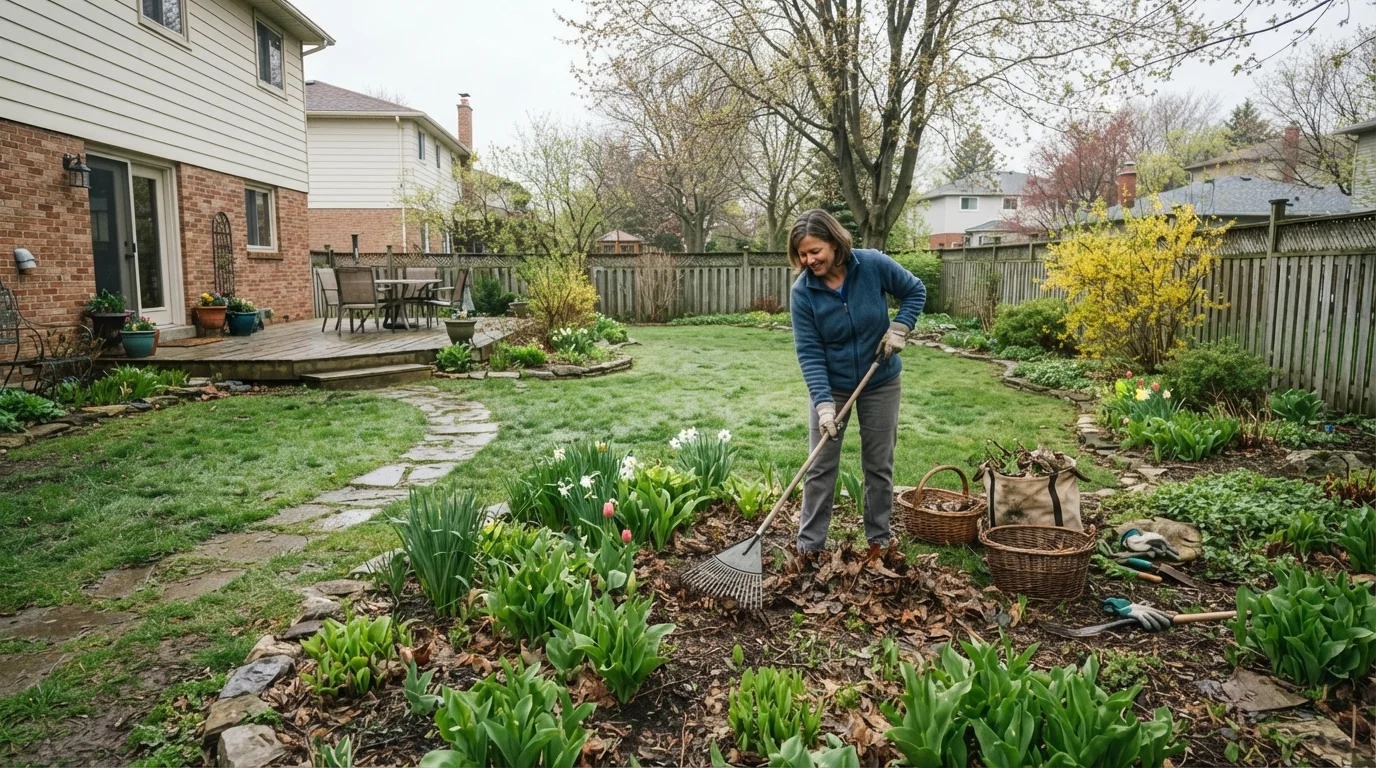
Stiff-tined leaf rake
Removes matted leaves, light thatch, and debris from lawn and bed surfaces without damaging emerging growth.
Bypass hand pruners
Makes clean cuts on stems and small branches up to about ¾ inch in diameter.
Loppers
Handles branches too large for hand pruners, typically up to 1½-2 inches in diameter.
Garden fork or spading fork
Loosens compacted soil in beds and works compost into the top layer without over-tilling.
Core aerator (rental)
Pulls plugs of soil to relieve compaction and improve water penetration in turf areas.
Compost or aged organic matter
Top-dresses garden beds to improve soil structure and fertility as the season begins.
Wheelbarrow or garden cart
Moves debris, compost, and mulch efficiently across the yard to reduce back-and-forth trips.
Kneeling pad or garden knee pads
Protects knees during extended work in garden beds - especially useful on hard or rocky soil.
Don't Work Wet Soil - It Compacts Easily
Walking on or digging into saturated garden beds can destroy soil structure that takes seasons to rebuild. Compacted soil drains poorly, restricts root growth, and reduces the effectiveness of any amendments you add. Wait until a handful of soil crumbles apart when squeezed rather than forming a sticky ball before beginning bed work.
Know Before You Cut: Pruning Timing Varies by Plant
Pruning a spring-blooming shrub before it flowers removes the buds that would have produced this year's blooms. When in doubt, wait and watch - you'll lose only one season of flowers, which is far less damaging than repeated mistimed cuts that weaken the plant's framework over time.
Lawn, Beds, and Beyond: Putting It All Together
Once you've worked through the checklist, take a slow walk around your property. Look for anything you missed - a low branch that rubbed the roof all winter, a section of edging that heaved out of the ground, a downspout that's directing water toward a foundation rather than away from it. These small observations, made now, are far easier and cheaper to address before the growing season is in full swing.
If your cleanup generates a meaningful pile of leaves, grass clippings, and spent plant material, consider routing it into a compost system rather than bagging it for the curb. Our guide to composting at home walks through how to set one up and manage it through the season - the finished compost becomes one of the most effective soil amendments you can apply next spring.
For ongoing lawn maintenance that doesn't eat your entire weekend, the smart lawn care guide covers mowing heights, feeding schedules, and aeration basics in plain terms. Spring cleanup is the starting line - a little strategy keeps the race manageable from here.