

Key Takeaways
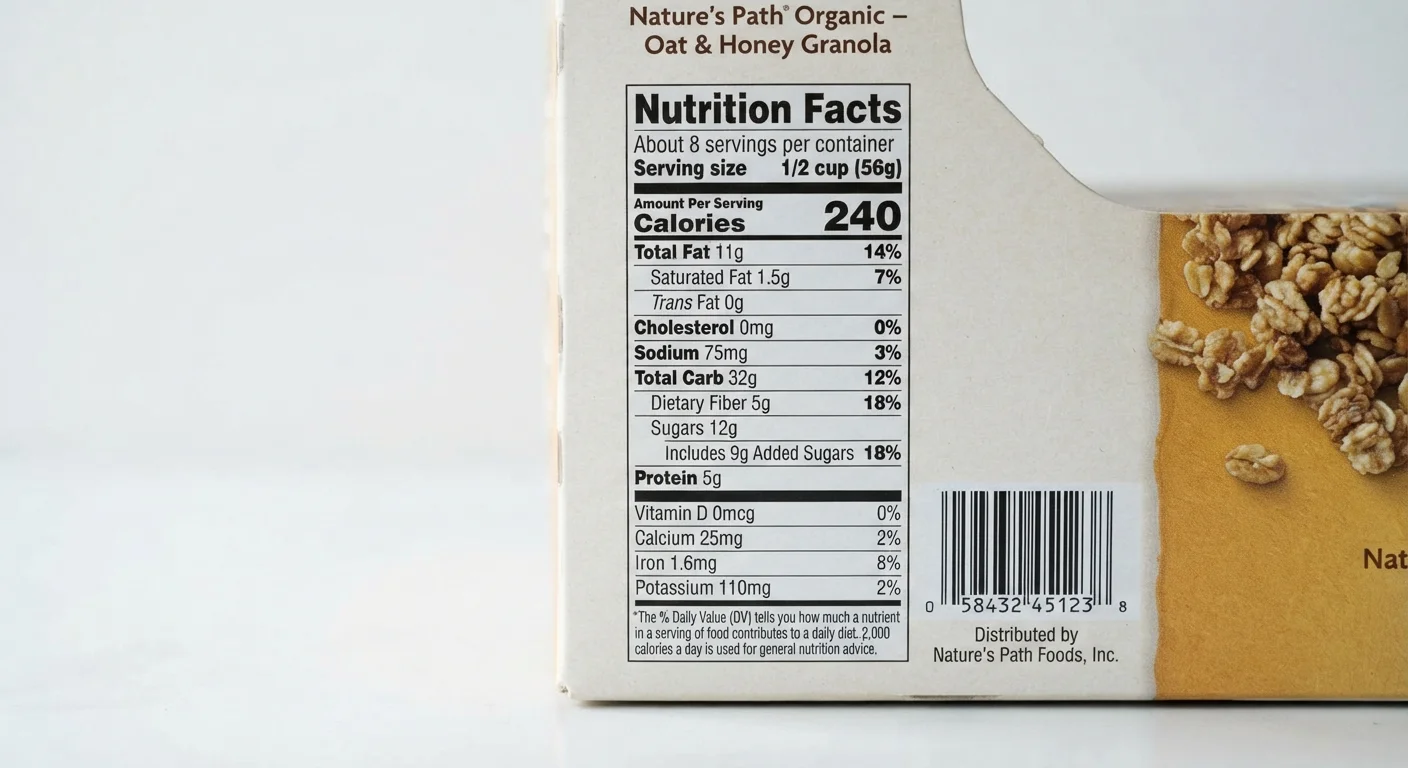
Nutrition Facts Label
The Nutrition Facts label is a standardized panel required by the U.S. Food and Drug Administration (FDA) on most packaged foods and beverages. It tells you how much of key nutrients - calories, fat, sodium, fiber, sugars, protein, and more - are in a specific amount of that food. The label is designed to help consumers compare products and make more informed dietary choices.
The FDA updated the Nutrition Facts label format in 2016 (with full compliance by 2020) to reflect current nutrition science, including a mandatory line for added sugars and updated Daily Value percentages.
Start Here: Serving Size and Servings Per Container
The very first thing to check on any Nutrition Facts label is the serving size and number of servings per container. Every single number below that line - calories, grams of fat, milligrams of sodium - applies to one serving only, not the whole package.
This distinction matters more than most people realize. A bag of chips might list 140 calories per serving, but if the bag contains three servings and you eat the whole thing, you've consumed 420 calories. The FDA standardizes serving sizes to reflect realistic eating amounts, making it easier to compare similar products - but those amounts don't tell you how much you should eat.
Compare Products Using the Same Serving Size
Before comparing two products side by side, verify their serving sizes are equivalent. A quick mental adjustment - multiplying or dividing the nutrient numbers - makes the comparison meaningful. Many shoppers skip this step and draw inaccurate conclusions about which option is more nutritious.
Before comparing two products, check that their serving sizes are the same. A cereal listing 200 calories per half-cup serving isn't automatically less nutritious than one showing 150 calories per three-quarter-cup serving - context changes everything.
Calories: Energy Density in Context
Calories measure the energy a food provides. The label displays calories prominently because total energy intake is a key factor in overall diet balance. However, calories alone don't tell you whether a food is nourishing - 200 calories of almonds delivers very different nutrients than 200 calories of a sugar-sweetened beverage.
Use calories as one data point alongside the nutrient breakdown below it. A food can be calorie-dense and still be worth eating regularly (like olive oil or nuts), while a low-calorie product can be nutritionally sparse. Common nutrition myths often focus on calories in isolation - the fuller picture requires looking at the whole label.
Nutrients to Limit - and Why
The middle section of the label lists nutrients that most Americans consume in excess and that, in high amounts, are associated with increased risk of cardiovascular disease, high blood pressure, and other conditions. These include:
- Saturated fat: Found in fatty meats, full-fat dairy, and many processed foods. Major dietary guidelines recommend limiting intake.
- Trans fat: Artificially produced through partial hydrogenation. There is no safe level, and the FDA has largely banned it - but trace amounts may still appear.
- Sodium: Most Americans consume far more than the recommended limit of 2,300 mg per day, largely from packaged and restaurant foods.
- Added sugars: Distinguished from naturally occurring sugars, these are added during manufacturing and contribute calories with little nutritional benefit.
A %DV of 5% or less per serving is generally considered low for these nutrients. Use this threshold as a quick screen when comparing products.
Cholesterol on the Label: A Nuanced Picture
Dietary cholesterol is still listed on the Nutrition Facts panel, but current nutrition science has moved away from strict dietary cholesterol limits for most people. The 2020-2025 Dietary Guidelines for Americans removed a specific daily cap, noting that saturated and trans fats have a greater effect on blood cholesterol levels for most individuals. Always discuss your personal cardiovascular risk factors with a healthcare provider rather than relying solely on label numbers.
Nutrients to Get More Of
Below the nutrients-to-limit section, the label highlights nutrients that many Americans don't get enough of. Adequate intake of these supports long-term health:
- Dietary fiber: Supports digestive health, helps regulate blood sugar, and is associated with reduced cardiovascular risk. Most Americans fall short of fiber recommendations - the label makes it easy to identify high-fiber options.
- Vitamin D and calcium: Critical for bone health; many adults are deficient in vitamin D in particular.
- Iron and potassium: Iron supports red blood cell function; potassium helps regulate blood pressure.
A %DV of 20% or more is generally considered high - a useful rule of thumb when you want to boost intake of these nutrients. For a deeper look at what the ingredient list can reveal that the Nutrition Facts panel can't, see reading an ingredient list.
70%
Americans who report reading nutrition labels
According to FDA consumer research, a large majority of Americans look at food labels, though understanding and use of %DV remains lower than label-reading frequency.
3,400 mg
Average daily sodium intake for U.S. adults
The CDC reports that American adults consume an average of about 3,400 mg of sodium per day - nearly 50% above the 2,300 mg daily limit recommended by major health guidelines.
10%
U.S. adults meeting daily fiber recommendations
Research published in the American Journal of Lifestyle Medicine found that fewer than 1 in 10 American adults meet recommended fiber intake levels, making the fiber line on the Nutrition Facts label especially worth checking.
Understanding % Daily Value at a Glance
The % Daily Value (%DV) column is one of the most practical tools on the label, yet it's often overlooked. It shows what percentage of a nutrient's daily recommended amount is provided by one serving, based on a 2,000-calorie reference diet.
You don't need to hit exactly 100% for every nutrient every day - that's an unrealistic standard. Instead, use %DV to assess the overall nutritional profile of a food relative to others. A food with 25% DV for sodium and 3% DV for fiber sends a clear signal: it's sodium-heavy and low in a nutrient most people need more of.
For those building more structured eating habits, building a balanced plate offers practical frameworks that work alongside - rather than instead of - label reading.
This article provides general nutrition information for educational purposes and is not a substitute for advice from a registered dietitian or qualified healthcare professional. Individual nutritional needs vary; consult a professional for personalized guidance.