

Key Takeaways
Drowsy Driving Impairment
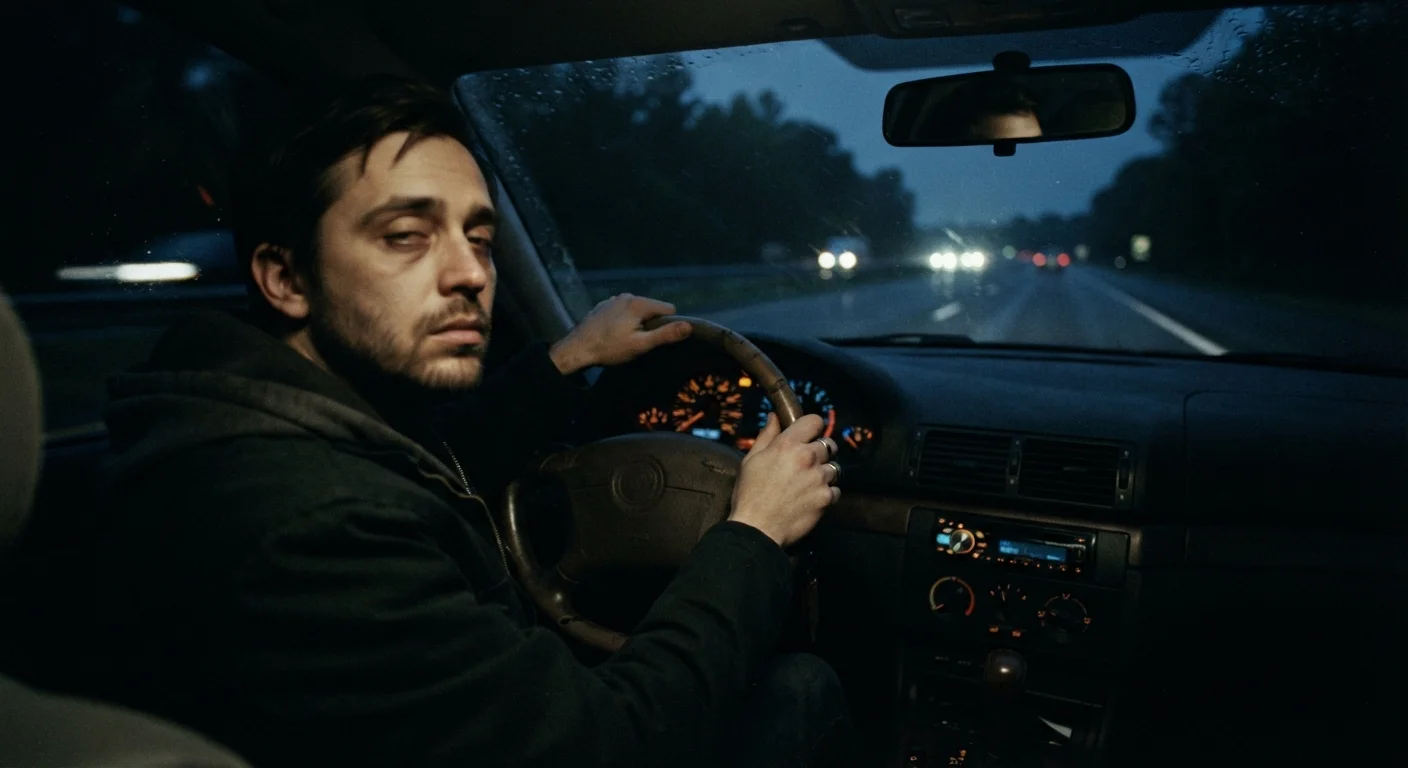
Drowsy driving refers to operating a vehicle while significantly sleep-deprived, causing measurable declines in reaction time, attention, decision-making, and lane control. Research consistently shows these cognitive deficits closely mirror the impairments caused by alcohol intoxication. Being awake for 18 hours or more can produce effects comparable to a blood alcohol concentration (BAC) of 0.05%, and 24 hours without sleep approaches 0.10% BAC equivalency.
These comparisons originate from peer-reviewed research, including studies published by the journal Sleep and cited by the National Highway Traffic Safety Administration (NHTSA), which measured psychomotor vigilance task performance under both sleep deprivation and alcohol conditions.
The Science Behind the Comparison
The parallel between sleep deprivation and alcohol impairment isn't a metaphor - it's a measurable finding from controlled research. Studies examining psychomotor vigilance (the ability to respond quickly and accurately to stimuli) found that sleep-deprived subjects performed comparably to those with legally significant BAC levels in reaction-time and sustained-attention tasks.
The mechanism differs - alcohol acts on GABA receptors while fatigue impairs the prefrontal cortex's ability to maintain alertness - but the functional result on driving performance is strikingly similar. Both impair the brain's ability to detect hazards quickly, maintain consistent speed and lane position, and make sound split-second decisions.
~100,000
Police-reported drowsy driving crashes per year (U.S.)
Estimated annually by the National Highway Traffic Safety Administration, with actual figures likely higher due to underreporting.
0.10% BAC
Alcohol equivalent after 24 hrs without sleep
Research published in peer-reviewed sleep science journals found psychomotor impairment equivalent to this legally intoxicated level.
350+ feet
Distance traveled during a 4-second microsleep at 60 mph
Illustrates the real-world consequence of brief involuntary sleep episodes while driving at highway speeds.
What makes fatigue uniquely dangerous is a phenomenon researchers call microsleeps: involuntary sleep episodes lasting 1-30 seconds. At 60 mph, a 4-second microsleep means a vehicle travels over 350 feet with essentially no driver input. Drivers often have no awareness these episodes occurred.
Why Drivers Underestimate Their Own Fatigue
Alcohol impairment is at least partly detectable - people can feel slowed reactions or recognize that they've been drinking. Fatigue impairment is more insidious. A driver's sense of how alert they feel is itself degraded by sleep deprivation, creating a feedback loop where the more tired you are, the less accurately you can assess your fitness to drive.
This is compounded by a well-documented tendency called sleep inertia - the grogginess immediately after waking - and by the fact that stimulation (conversation, highway driving, coffee) can temporarily mask drowsiness without actually resolving it. When the stimulation fades, impairment rebounds quickly.
Plan Your Breaks Before You Leave
Before a long drive, identify rest stop locations along your route at roughly two-hour intervals. Having a plan reduces the temptation to push through fatigue. If you notice warning signs of drowsiness - yawning repeatedly, drifting lanes, or struggling to remember recent miles - pull over at the next safe location, even if it's ahead of your planned stop.
For drivers already managing reduced visibility conditions, the combination is especially hazardous. See night driving risk-reduction practices for additional strategies when driving after dark.
Who Is Most at Risk
Certain groups face disproportionate exposure to fatigued driving conditions. Long-haul truck drivers, shift workers, new parents, and people with undiagnosed sleep disorders (such as obstructive sleep apnea) are among the most vulnerable. Commercial driving regulations address some of this risk through hours-of-service rules, but the same risks apply to private drivers with no regulatory oversight of their rest habits.
Younger drivers - especially those aged 16-24 - are overrepresented in drowsy-driving crashes, likely due to irregular sleep schedules combined with less driving experience. Long trips without scheduled breaks also dramatically increase risk regardless of age or experience level.
Understanding how sleep affects broader wellbeing can also help drivers recognize patterns in their own habits. The relationship between sleep and mental health is a two-way dynamic that can further compound alertness challenges behind the wheel.
Practical Countermeasures That Actually Work
The most effective countermeasure is straightforward: adequate sleep before driving. For longer trips, scheduling regular breaks every two hours - or every 100 miles - is a widely supported safety guideline. Pulling over for a 15-20 minute nap has shown real short-term benefit in research settings and is far safer than pushing through fatigue.
Caffeine can provide a limited alertness boost lasting roughly 30-45 minutes for many people, but it does not restore reaction time or judgment to fully rested levels and its effects diminish with habitual use. The combination of a short nap followed by caffeine as you wake has some research support for temporary alertness gains during rest stops.
Distractions like passengers and in-car noise can temporarily mask fatigue, but they don't eliminate it. Managing in-car distractions is a separate skill from managing fatigue - and conflating the two can give drivers false confidence about their alertness level.
Modern vehicles increasingly include driver-monitoring systems and lane-departure alerts, which can provide a secondary safety net. However, these systems are supplementary - they are not substitutes for a rested driver.