

Key Takeaways
Check Engine Light (CEL)
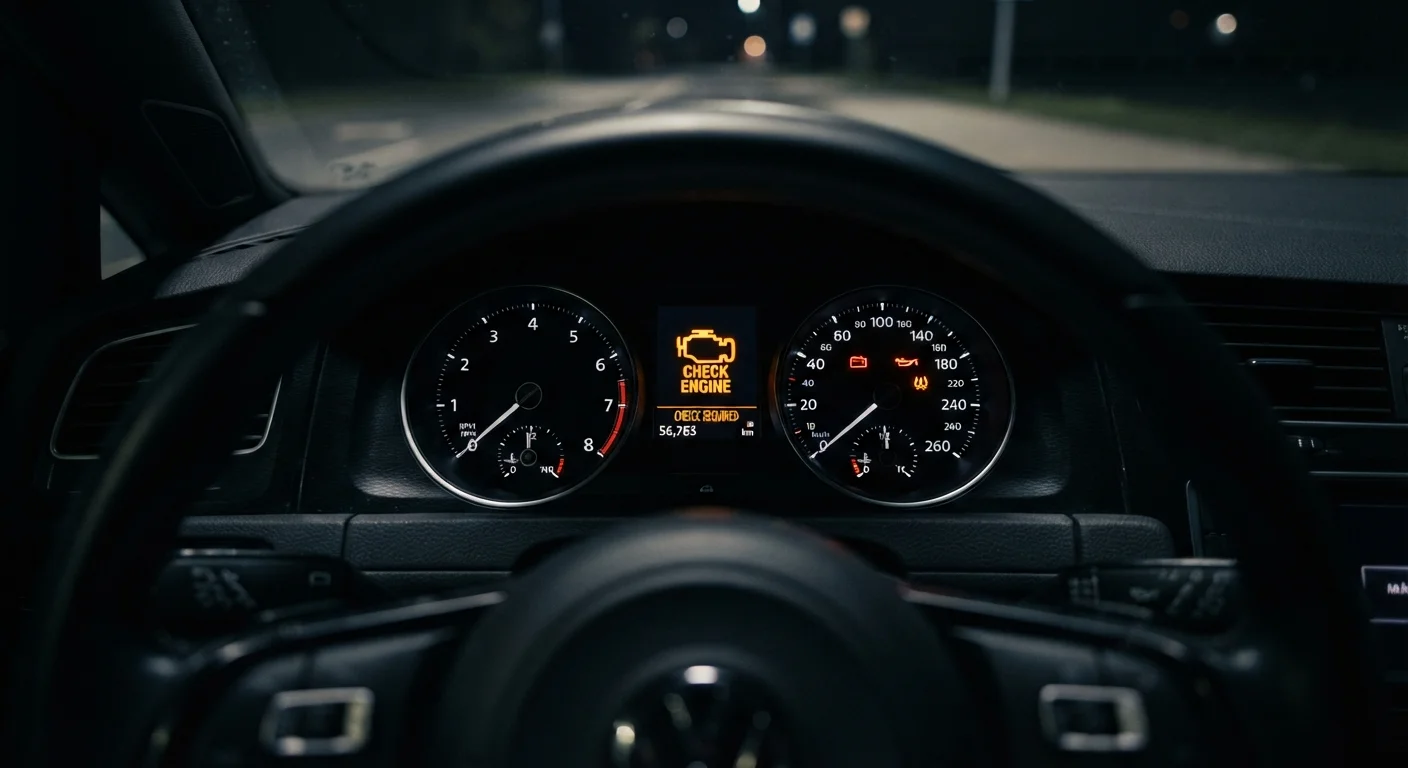
The check engine light - formally called the Malfunction Indicator Lamp (MIL) - is a dashboard warning that your vehicle's onboard diagnostic system (OBD-II) has detected a problem somewhere in the engine, emissions, or related systems. It does not point to a single issue; it simply signals that something needs attention. The light can be triggered by dozens of different fault codes stored in your car's computer.
OBD-II became federally mandated on all U.S. passenger vehicles built after 1996. When a fault is detected, the system stores a Diagnostic Trouble Code (DTC) that a scan tool can read to identify the specific system involved.
What the Check Engine Light Actually Monitors
Your vehicle's OBD-II system continuously monitors dozens of sensors and subsystems. When a reading falls outside acceptable parameters on two or more consecutive drive cycles, the system stores a fault code and illuminates the check engine light. The systems most commonly flagged include:
- Engine and ignition: misfires, spark plug or coil failures
- Fuel and emissions: oxygen sensors, catalytic converter efficiency, evaporative emission control (EVAP) leaks
- Exhaust system: EGR (exhaust gas recirculation) valve faults
- Mass airflow and throttle: sensors measuring air intake and throttle position
Because the system spans so many components, the light alone tells you very little. The fault code stored alongside it is what actually points toward the problem area. Think of the light as a notification, and the code as the subject line - you still need to open the message to understand what's wrong.
Steady vs. Flashing: Understanding the Urgency
The behavior of the light matters as much as the light itself.
Steady light: The system has detected a fault that needs attention, but it is not causing immediate damage in real time. Common examples include a marginal oxygen sensor reading or a failing EVAP solenoid. You can typically drive carefully to a repair shop without risking further damage - though putting it off for weeks is not advisable.
Flashing or blinking light: This indicates an active engine misfire - unburned fuel is being pushed into the catalytic converter, which can cause serious and expensive damage within minutes. If you see a flashing CEL, reduce your speed, avoid aggressive acceleration, and get the vehicle to a safe location. A tow may be the safest option depending on severity.
Know Your Dashboard - Before the Light Comes On
Familiarizing yourself with your vehicle's warning lights before a problem occurs makes it far easier to respond calmly when one appears. Your owner's manual lists every indicator and its meaning. Spending five minutes with that section now can save significant stress later.
Some vehicles also display a reduced power or engine symbol alongside the CEL. Any combination of warning lights is a stronger signal to stop driving and seek immediate diagnosis.
The Most Common Triggers - and Their Urgency Level
$0
Cost of a basic OBD-II code scan
Many national auto parts retailers offer free fault-code reading in-store, making initial diagnosis accessible to most drivers.
~$75-$150
Typical shop diagnostic fee
A professional diagnostic inspection goes beyond code reading to confirm the root cause; fees vary by region and shop.
Top trigger
Oxygen sensor faults among CEL causes
Automotive service data consistently ranks oxygen sensor issues among the most frequently diagnosed check engine light causes in the U.S.
Understanding which problems are common can help you assess the situation more calmly. The triggers below account for a large share of CEL incidents, according to automotive industry data:
- Loose or faulty gas cap
- Low urgency. Retighten the cap and monitor. The light may clear within a few drive cycles.
- Oxygen sensor failure
- Moderate urgency. A failed O2 sensor affects fuel economy and emissions. Safe to drive short-term, but continued use can stress the catalytic converter.
- Catalytic converter inefficiency
- Moderate-to-high urgency. Often caused by a neglected upstream issue (like a bad O2 sensor). Catalytic converter replacement is one of the costlier repairs - early diagnosis helps prevent it.
- Spark plug or ignition coil failure
- Moderate urgency. Will often cause noticeable misfires or rough idling. Address promptly to prevent catalytic converter damage.
- Mass airflow sensor fault
- Moderate urgency. Affects fuel trim and performance. Safe for brief driving but should be diagnosed soon.
Staying current with scheduled maintenance reduces the likelihood of many of these triggers. See our car maintenance schedule guide for a breakdown of service intervals that keep common CEL culprits in check.
How to Respond Step by Step
When the light comes on, a measured response beats either panic or complete indifference.
- Check the gas cap first. Remove it, inspect the seal, and retighten until you hear it click. It costs nothing and resolves the issue surprisingly often.
- Note any symptoms. Rough idling, hesitation, reduced power, unusual smells, or poor fuel economy alongside the CEL gives a mechanic useful context and narrows the diagnosis.
- Get the code read. Many auto parts retailers offer free OBD-II scans. The code won't tell you exactly what to replace, but it tells you which system is flagged so you can research or discuss it intelligently with a mechanic.
- Assess the light's behavior. Steady light with no symptoms? Schedule a shop visit within the week. Flashing light or noticeable drivability problems? Stop driving and arrange professional inspection promptly.
- See a qualified mechanic for diagnosis and repair. Code reading identifies the system - proper diagnosis identifies the cause. Replacing parts based on codes alone without confirming the root issue is a common and costly mistake.
Before any longer drive, it's also worth running through a quick vehicle check. Our pre-trip safety checklist walks through the basics - tires, lights, fluids - that help you catch problems before they escalate.
Clearing Codes Without Fixing the Problem
Disconnecting the battery or using a scanner to erase fault codes does not fix the underlying issue - it simply resets the light temporarily. If the root cause remains, the light will return after the system completes its monitoring cycles. Additionally, clearing codes before an emissions test resets the OBD-II monitors, which typically means the vehicle will not pass until those monitors run to completion.