

Key Takeaways
Before You Leave the House
Most in-flight problems are actually pre-flight problems in disguise. A hungry toddler, a lost boarding pass, or a car seat you weren't sure you could bring - these are all solvable at home, not at the gate.
Check your airline's policy on car seats and strollers before you pack. Most US carriers allow an FAA-approved car seat on board for a child occupying a paid seat, and virtually all allow you to gate-check a stroller at no charge. If you plan to use a car seat on the plane, confirm it's FAA-approved - the label is usually on the side of the seat. For a deeper look at what to bring versus what to leave behind, see our practical family packing guide.
Build your carry-on around survival, not convenience. One change of clothes per child (plus one for you), a day's worth of snacks, any medications, and entertainment loaded offline on a device. Keep these in a bag you can reach from your seat without standing up.
What you will need
Navigating the Airport With Kids
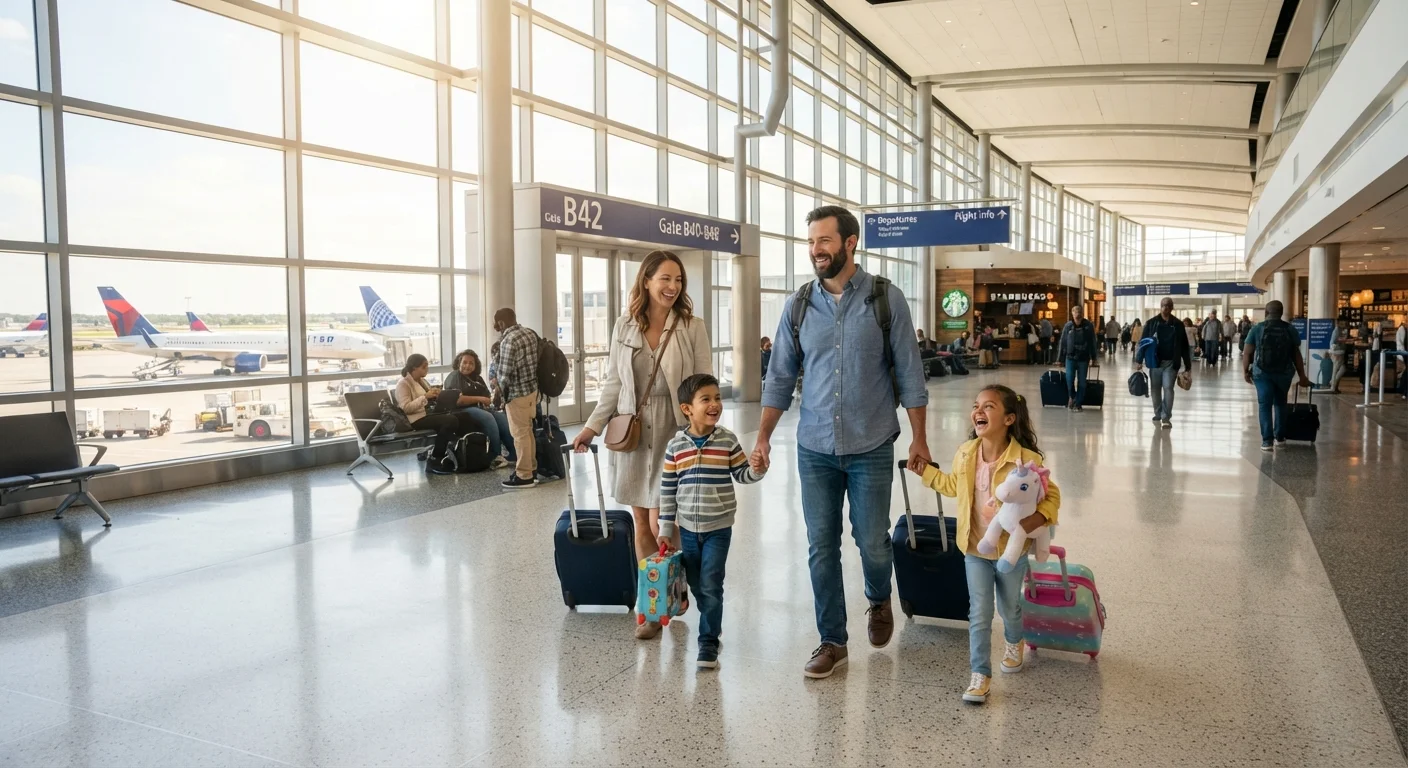
Arrive at least 30 minutes earlier than you normally would for a solo flight - 90 minutes before domestic departure is a reasonable baseline for families with children under six. Add another 30 minutes if you're checking bags or traveling internationally.
Use the family security lane
Most major US airports have a designated family or special-assistance security lane. Look for signage near the standard TSA checkpoint or ask an agent. These lanes allow extra time and space to manage strollers, car seats, and children's shoes without the pressure of a fast-moving line behind you.
Fold the stroller before you reach the conveyor belt, not at it. Remove children from carriers and strollers - TSA requires them to walk through or be carried through the metal detector separately from the carrier.
Gate-check the stroller correctly
Request a gate-check tag from the gate agent as soon as you arrive at your departure gate. Collapse or bag the stroller just before boarding - not at home - so you have it for the long terminal walk. Most airlines return gate-checked strollers to the jet bridge door upon arrival, meaning you have it the moment you step off the plane.
Board early and set up deliberately
Families with young children are typically invited to board in the first group. Use this time wisely: install the car seat if you're using one, stow the carry-on, and arrange each child's activity supplies within reach before other passengers board. Overhead bins fill quickly - getting on early means you control the storage near your row.
Manage takeoff and landing ear pressure
Begin your pressure-relief strategy a few minutes before the plane starts its descent - the captain usually announces it. For infants, nurse or offer a bottle. For toddlers and older children, offer something to chew or swallow: crackers, gum for those old enough, or a drink through a straw. Swallowing activates the Eustachian tubes and helps equalize pressure.
Plan the in-flight activity rotation
Divide your flight into thirds mentally. The first third: a new small toy, a coloring book, or an activity they haven't seen before. The middle third: snacks and a walk to the lavatory if the seatbelt sign is off. The final third: screens, headphones, and whatever has the longest hold on their attention. This pacing prevents you from burning through your best tools too early.
Age and developmental stage change everything about how airport time feels. Our guide on traveling with kids at different ages breaks down which strategies work as children grow from toddlers into teenagers.
Keeping the Peace at 30,000 Feet
Once you're in the air, your job shifts from logistics to management. The good news: most children do better on flights than their parents expect, especially with a little preparation.
The Window Seat Is Your Friend
Young children who've never flown are often genuinely mesmerized by the view during takeoff and climb. If your child is old enough to enjoy it, a window seat buys you 10-15 minutes of calm during one of the trickiest phases of any flight. Save the aisle seat for the parent who'll be making the most trips to the lavatory.
Ear pressure is the single biggest physical discomfort for young fliers. During ascent and descent, encourage swallowing by offering a bottle, sippy cup, nursing, or a chewy snack. Older children can try yawning deliberately or chewing gum. If your child has an active ear infection, consult a healthcare provider before flying.
Entertainment strategy: Rotate activities rather than opening everything at once. Start with a new small toy or activity book, then move to a snack, then screens. Saving the tablet for the second half of a flight gives you a reliable reset when energy flags.
If you're weighing whether to fly or drive for your next family trip, our piece on what makes road trips with kids work lays out the tradeoffs honestly.
Lap Infant Policies Vary by Airline
In the US, children under two may fly as a lap infant on domestic routes without a paid seat, but this is not a safety recommendation - it's a policy. Aviation safety authorities note that an FAA-approved car seat is the safest way to secure a young child on an aircraft. Review your airline's lap infant policy and consult official guidance before deciding how to seat your youngest traveler.