

Key Takeaways
Why Cat Myths Are So Persistent
Cats have shared human homes for thousands of years, yet a surprising number of deeply held beliefs about their diet, behavior, and biology turn out to be inaccurate - sometimes harmfully so. Part of the problem is that cats are harder to read than dogs: their subtle body language and independent streaks make them easy to misinterpret. Cultural images, folk wisdom, and the internet all do their part to keep misconceptions alive.
Understanding what is actually true about feline biology and behavior helps owners make better decisions, from what goes in the food bowl to how they respond when something seems off. The myths below come up regularly in veterinary practices and are worth correcting once and for all.
Myth
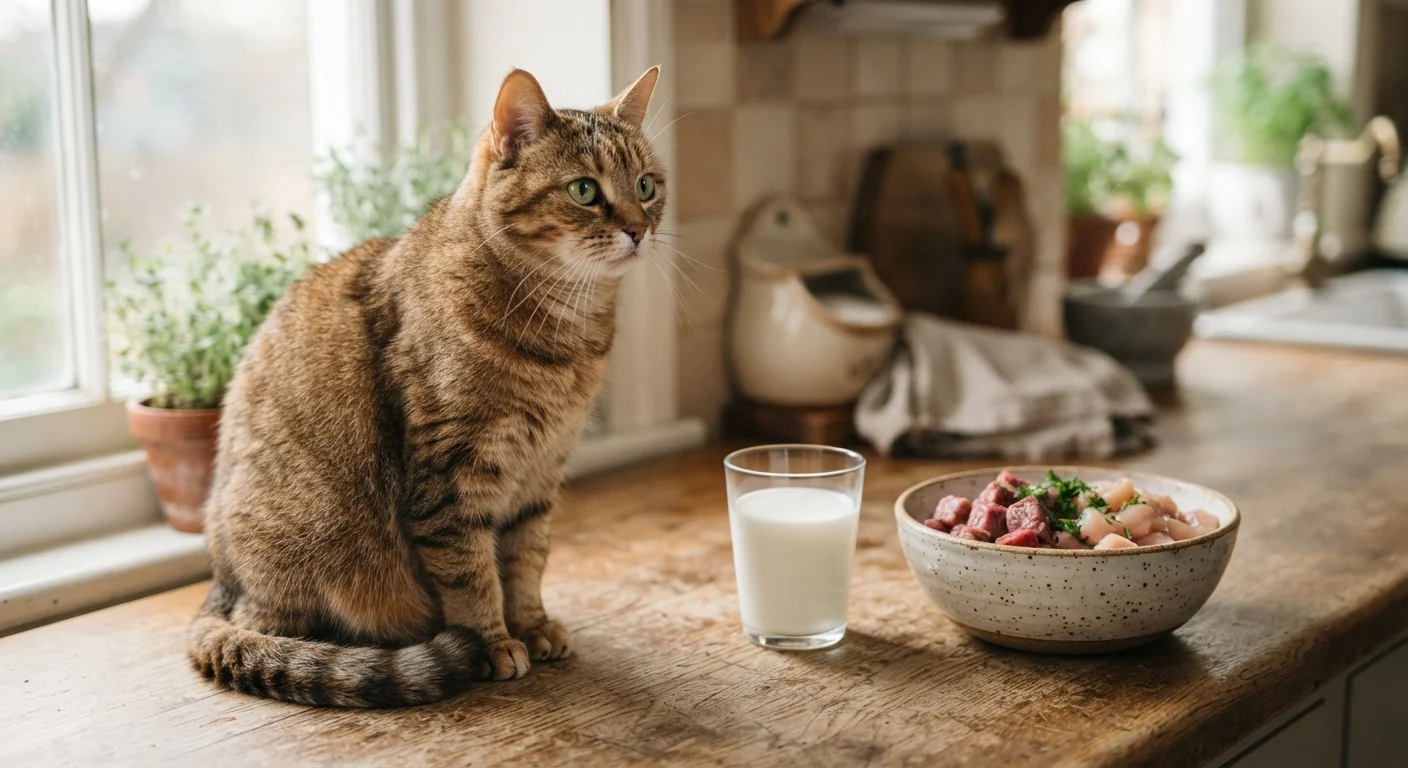
Cats love milk and it's a healthy treat for them.
Fact
Most adult cats are lactose intolerant and cow's milk can cause digestive upset including diarrhea.
The image of a cat happily lapping up a saucer of milk is one of the most enduring in popular culture - and one of the least accurate. Kittens produce an enzyme called lactase that helps them digest their mother's milk, but most cats produce significantly less of it after weaning. When an adult cat drinks cow's milk, the lactose passes undigested into the large intestine, where it ferments and causes gas, bloating, and diarrhea. Fresh water is always the appropriate everyday drink for cats. If owners want to offer something milk-like as an occasional treat, commercially available lactose-free cat milk products are a safer option, though still not a nutritional necessity.
Myth
Raw meat diets are more natural and therefore healthier for cats.
Fact
Raw diets carry documented risks of bacterial and parasitic contamination that can harm both cats and the humans in their household.
Proponents of raw feeding often argue that cats evolved eating uncooked prey, so raw meat is the most biologically appropriate food. While cats are indeed obligate carnivores, the comparison to ancestral hunting overlooks the fact that raw commercial meat can carry pathogens - including Salmonella, E. coli, and Toxoplasma - that freshly killed prey in the wild would not harbor in the same concentrations. The AVMA has issued formal guidance advising against raw protein diets for pets, citing risks to animal and human health alike, particularly in households with young children, elderly individuals, or immunocompromised people. If you are considering any non-standard diet for your cat, a board-certified veterinary nutritionist is the right resource before making changes.
Myth
Cats have nine lives and can survive falls from any height.
Fact
Cats have a remarkable self-righting reflex and can survive significant falls, but they absolutely sustain serious injuries and can die from them.
Cats do possess an impressive vestibular system that allows them to rotate mid-air and land feet-first - a response that activates within fractions of a second. At certain heights, their spread-eagle posture also increases drag, reducing terminal velocity. These adaptations explain why cats sometimes survive falls that would be fatal to other animals. However, veterinary emergency rooms regularly treat cats with fractured jaws, shattered legs, and internal injuries from falls - a condition sometimes called high-rise syndrome. The "nine lives" idea is a metaphor for resilience, not a biological fact. Falls from windows and balconies are a preventable hazard for indoor cats, and window screens or balcony netting are practical safeguards.
Myth
A purring cat is always a happy cat.
Fact
Cats purr in a wide range of emotional and physical states, including pain, anxiety, and illness.
Purring is one of the most misread signals in cat behavior. While cats do purr when content, they also purr when frightened, in labor, injured, or dying. Researchers believe purring may function as a self-soothing mechanism - and some evidence suggests the vibration frequency of a cat's purr (typically 25-150 Hz) may support bone density and tissue healing, which could explain why injured cats often purr. The practical takeaway for owners: a purring cat at the vet is not necessarily a relaxed cat. Context matters. If your cat is purring while also hiding, refusing food, or showing other changes in behavior, the purr may be a stress signal rather than a sign everything is fine.
Myth
Cats are solitary animals that don't really bond with people.
Fact
Research consistently shows that cats form genuine social attachments to their owners and can experience separation-related distress.
The idea that cats are fundamentally indifferent to people persists partly because cats express attachment differently than dogs. They are less likely to seek physical contact and more likely to signal connection through proximity, slow blinking, or presenting their flank. Studies using separation-and-reunion protocols - similar to those used to measure infant attachment - have found that many cats display patterns consistent with secure and insecure attachment to their caregivers. Cats can and do experience loneliness, and multi-cat households can provide companionship when owners are frequently away, provided introductions are handled carefully.
Myth
Indoor cats don't need as many vet visits because they aren't exposed to outdoor hazards.
Fact
Indoor cats still develop serious illnesses and benefit from routine veterinary care on the same schedule as outdoor cats.
Indoor living reduces certain risks - trauma from cars or predators, exposure to some infectious diseases - but it does not protect against obesity, dental disease, urinary tract issues, hyperthyroidism, kidney disease, or cancer, all of which are common in indoor cats. Many of these conditions develop gradually and are detectable earlier with routine wellness exams. Veterinary organizations generally recommend at least annual check-ups for adult cats and more frequent visits for seniors. Skipping routine care because a cat "stays inside" can result in conditions that are caught later, when they are more difficult and costly to manage.
Diet Myths That Can Genuinely Harm Cats
Nutrition misconceptions are especially consequential because they influence daily decisions. See our guide to wet and dry food choices for a deeper look at how feeding format affects hydration and overall health. And because nutritional needs shift significantly as cats age, the life-stage nutrition overview is worth consulting alongside this article.
Raw Diets and Household Safety
If you currently feed or are considering a raw diet, be aware that food-safety precautions extend beyond your cat's bowl. Raw meat preparation surfaces, utensils, and your cat's mouth and feces can all carry pathogens. Immunocompromised individuals, pregnant people, and young children face heightened risk. Discuss the decision with a veterinarian before proceeding - not just with online advocacy communities.
Beyond the milk and raw diet debates, some owners assume cats are fine eating dog food in a pinch. They are not. Cats are obligate carnivores - they require nutrients like taurine and arachidonic acid in amounts that dog food formulations simply do not provide. Chronic feeding of the wrong diet can lead to serious, preventable conditions.
Behavior Myths That Affect How Owners Relate to Their Cats
Behavioral myths often lead owners to misread what their cat is communicating - sometimes ignoring genuine stress signals, sometimes feeling rejected by a cat who is simply expressing affection in a feline way. If you've ever wondered why your cat knocks objects off surfaces or seems indifferent to your presence, those behaviors have real explanations. Feline bonding looks different from canine bonding, and understanding that distinction changes how owners experience their relationship with their pet.
Purring at the Vet Isn't Always Reassurance
Many cat owners reassure veterinary staff that their cat 'loves coming in' because it's purring throughout the exam. Veterinary professionals are trained to interpret purring in context - a cat that is also tense, crouching low, or showing dilated pupils may be purring from stress rather than pleasure. Always provide your vet with a full behavioral picture, including any changes you've noticed at home, rather than relying on purring as a sign of wellness.
Cats that seem aloof, destructive, or uninterested in interaction often need more environmental enrichment rather than less attention. Indoor cats in particular benefit from climbing structures, puzzle feeders, and interactive play - not because they are bored in a human sense, but because they are predators whose instincts need an outlet. See our indoor vs. outdoor cat overview for a fuller picture of how environment shapes behavior and health.