

Key Takeaways
The 50/30/20 Rule
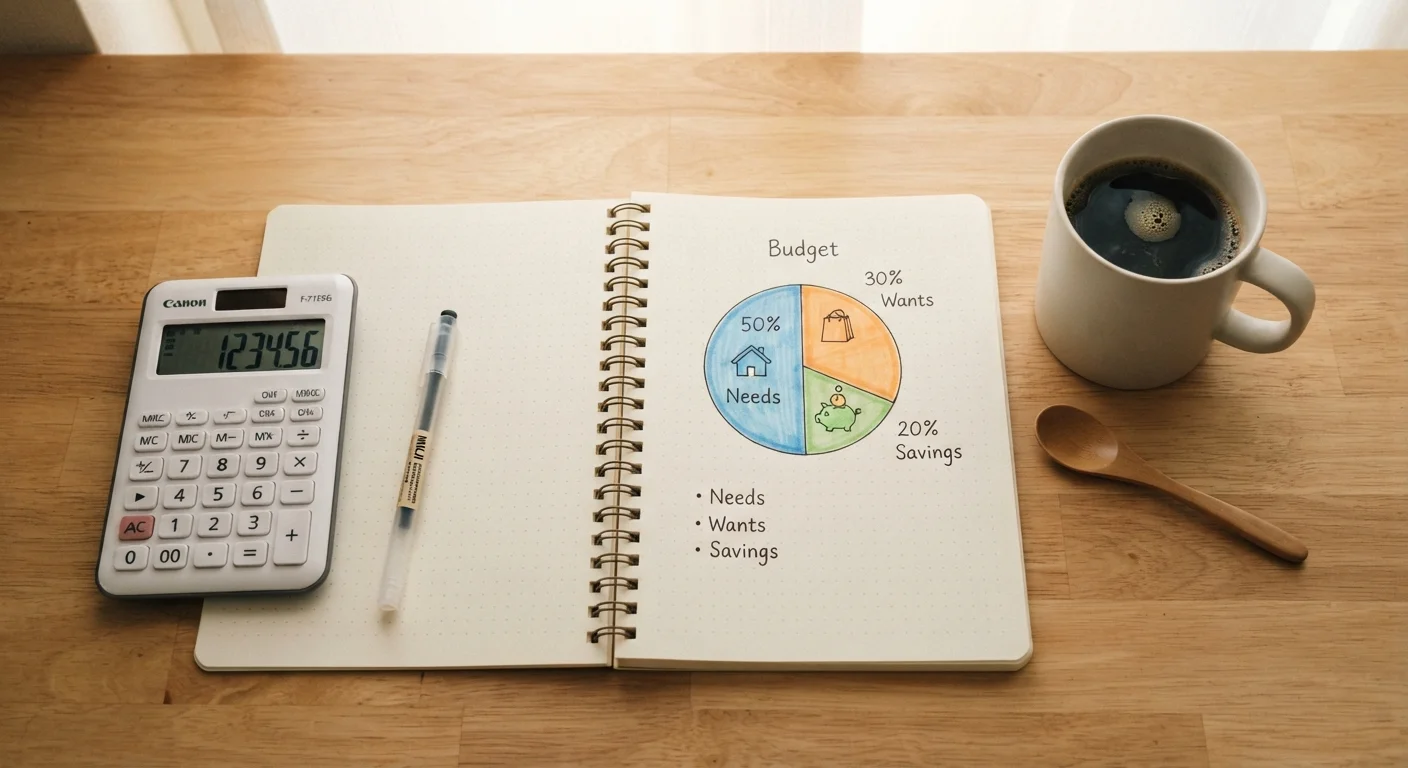
The 50/30/20 rule is a budgeting framework that divides your monthly after-tax income into three categories: 50% for needs, 30% for wants, and 20% for savings and debt repayment. It's designed to give households a straightforward starting point for managing money without tracking every dollar. The goal is balance - covering essentials, enjoying life, and building financial security simultaneously.
The framework is widely attributed to U.S. Senator Elizabeth Warren and her daughter Amelia Warren Tyagi, who described it in their 2005 book 'All Your Worth: The Ultimate Lifetime Money Plan.' It applies to net (after-tax) income, not gross income.
Breaking Down the Three Categories
The math is straightforward, but the definitions matter. Here's how each slice actually works in practice.
50% - Needs
This covers expenses that are genuinely non-negotiable: housing, utilities, groceries, health insurance premiums, transportation costs required for work, and minimum payments on any debt. If these consistently consume more than half your take-home pay, it's a signal that either income needs to rise or a major fixed cost - most likely housing - needs to be reconsidered over time.
30% - Wants
Wants are the expenses that add quality to life but aren't survival essentials: restaurant meals, streaming services, hobbies, clothing beyond basics, and vacations. Many people underestimate how much flows into this category - which is exactly why naming it explicitly is useful. If your needs are eating 55% of income, this is where you find room to adjust.
20% - Savings and Debt Repayment
This bucket does double duty. It covers contributions to an emergency fund, retirement accounts (like a 401(k) or IRA), and any debt payments above the required minimum. If you carry high-interest debt, most personal finance guidance suggests tackling that first before directing funds toward investing. The complete picture of household budgeting covers how to sequence these priorities.
~34%
Average share of income spent on housing
According to the U.S. Bureau of Labor Statistics Consumer Expenditure Survey, housing regularly accounts for around a third of household spending - making the 50% needs target tight for many renters.
$5,000+
Median American credit card debt per household
Federal Reserve data consistently shows many U.S. households carry revolving credit card balances, underscoring why the 20% debt-and-savings bucket deserves priority.
1 in 4
Americans with no emergency savings
Bankrate surveys have repeatedly found that a significant share of U.S. adults have no emergency savings - highlighting why the savings component of the 50/30/20 rule matters most.
Where the Rule Works - and Where It Struggles
The 50/30/20 rule earns its popularity because it's simple enough to remember and flexible enough to start with today. But it has real limitations worth understanding before you commit.
Where it works well: Middle-income households with stable paychecks and moderate housing costs often find the ratios roughly match their lives already - making the framework a useful accountability check rather than a complete overhaul. It's also an excellent entry point for someone budgeting for the first time. Budgeting basics rarely need to be complex to be effective.
Where it breaks down: In high-cost-of-living cities, rent alone can swallow 40-50% of a modest income before a single grocery run. Low-income households face a structural mismatch - when needs reliably exceed 50%, the math simply doesn't hold. At the other end, high earners may find 30% allocated to wants far exceeds what they'd ever spend, suggesting the percentages should shift toward savings.
Calibrate Before You Commit
Before adopting any percentage split, run one month of actual spending through the three categories using your bank statements. Most people discover their real allocation differs significantly from their assumptions. That baseline is more useful than any generic rule as your true starting point.
The broader lesson is that percentage-based budgeting is inherently scalable, but the specific percentages require honest calibration. For a deeper look at how percentage frameworks adapt as income changes, see our article on percentage-based budgeting.
Adjusting the Formula to Fit Your Real Life
The 50/30/20 rule is a starting point, not a sentence. Here are practical ways to adapt it without abandoning the underlying logic.
- High housing costs: Try a 60/20/20 split - reduce wants, not savings - until your housing situation changes.
- Aggressive debt payoff: Shift to 50/20/30, redirecting the wants slice toward debt elimination while you're in payoff mode.
- Variable income: Budget against your lowest reliable monthly income. Any surplus in better months goes directly to savings before lifestyle expands.
- Building an emergency fund from scratch: Temporarily compress wants to 20% and boost savings to 30% until you have three to six months of essential expenses set aside.
The point is directional discipline: spend less than you earn, cover your essentials, enjoy life in a measured way, and make consistent progress on your financial future. How you carve the pie is secondary to actually following a plan. For more on building a budget that holds up in real life, Building a Budget That Reflects Your Actual Life offers concrete habits for making any framework stick long-term.
This article is for general informational and educational purposes only and does not constitute personalized financial advice. Consult a qualified financial professional for guidance tailored to your individual circumstances.