

Key Takeaways
Option A
Paying Yourself First
The proactive, habit-building savings approach.
Best for: People who want to automate savings discipline before spending temptation takes over.
Option B
Saving What's Left Over
The flexible, spend-first savings method.
Best for: People with highly variable income who need spending flexibility before committing to savings.
If you consistently spend everything before the month ends
Paying Yourself First
Automating a savings transfer on payday removes temptation from the equation entirely, making consistent saving far more likely.
If your income varies significantly month to month
Saving What's Left Over
A rigid fixed transfer can cause overdrafts or missed bills when earnings are uneven - a percentage-based or end-of-month approach offers more flexibility.
If you want to build long-term wealth through compounding
Paying Yourself First
Getting money into savings or investment accounts earlier in each pay cycle gives it more time to grow, which matters significantly over years and decades.
If you're just starting to build a savings habit
Paying Yourself First
Even a small automatic transfer trains your brain to treat savings as normal, making it easier to increase the amount over time.
What Each Approach Actually Means
The difference between these two strategies sounds simple, but it has profound effects on real-world savings outcomes.
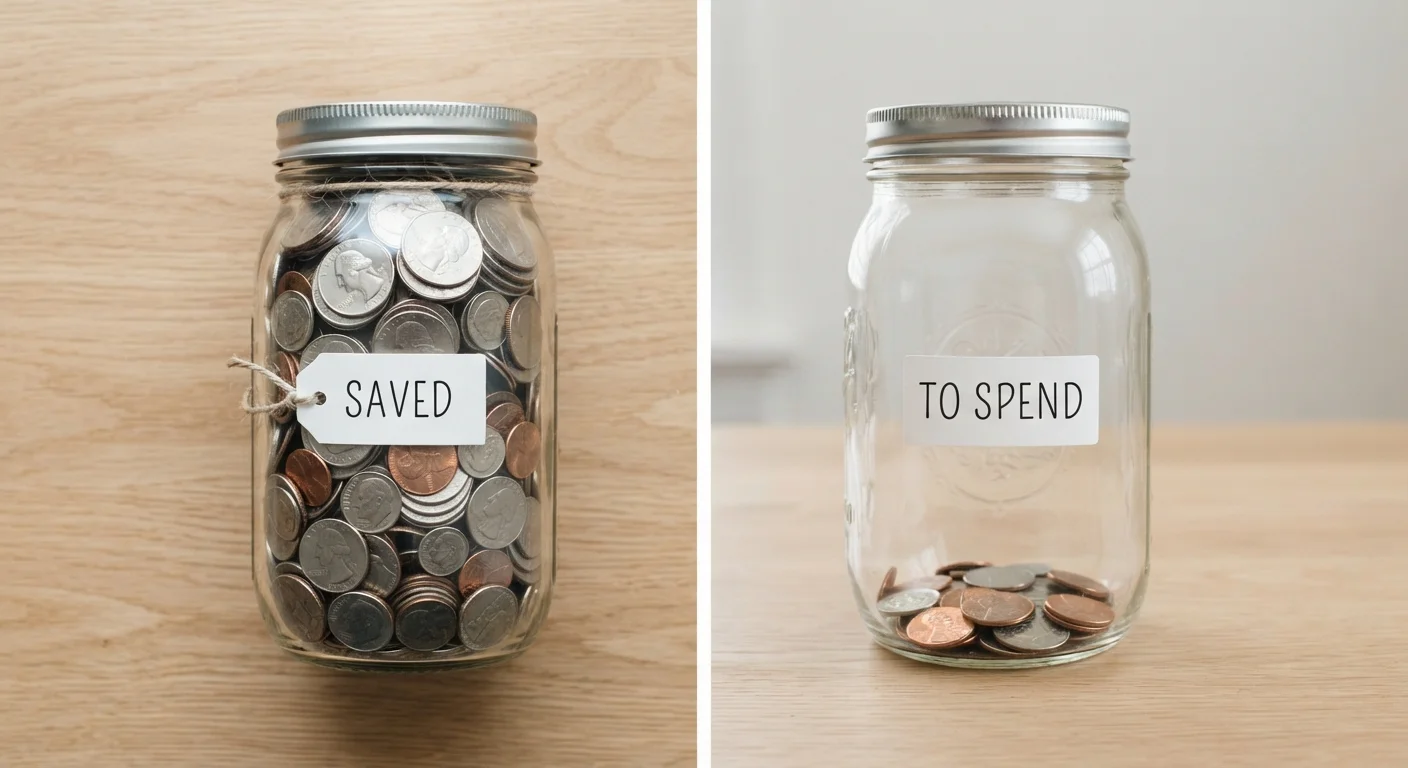
Paying yourself first means that the moment income hits your account, a predetermined amount - say, 10% or $200 - moves immediately to savings or an investment account before you pay a single bill or make a single purchase. Your budget is then built around whatever remains. Popularized in personal finance circles and embedded in frameworks like the 50/30/20 rule, the idea is straightforward: savings isn't what survives your spending, it's what comes first.
Saving what's left over is the approach most Americans default to without meaning to. Pay the rent, the utilities, the groceries, go about the month - and then, if there's anything left on day 29, transfer it to savings. Logically it sounds fine. In practice, lifestyle expenses tend to expand to fill available money, meaning the leftover is often smaller than intended or nonexistent.
| Criterion | Paying Yourself First | Saving What's Left Over |
|---|---|---|
| When savings happens | Immediately on payday | End of the month, if anything remains |
| Willpower required | Low - automated and habitual | High - requires monthly discipline |
| Consistency | High - same amount every cycle | Variable - depends on spending month to month |
| Risk of saving nothing | Low | High - lifestyle inflation fills the gap |
| Flexibility for variable income | Lower - fixed amounts can cause overdrafts | Higher - amount adjusts to earnings naturally |
| Best enabled by | Automatic transfers, payroll deductions | Strong budgeting habits, monthly review |
Why Paying Yourself First Works - and When It Doesn't
The behavioral case for paying yourself first is strong. It sidesteps the need for ongoing willpower by making saving automatic. Studies in behavioral economics consistently show that people who automate savings outperform those who rely on conscious decisions each pay cycle. If you've ever told yourself you'd save more "next month" and then didn't, you've experienced the gap this strategy closes.
Automation is the practical tool that makes it happen. Setting up a recurring transfer to a high-yield savings account on payday means the decision is made once, not monthly. For retirement contributions, a 401(k) payroll deduction does this automatically - money never reaches your checking account at all. To understand why getting money in earlier matters, see what compound interest actually does over time.
Where it can stumble: if your fixed transfer amount is too aggressive relative to your actual take-home, you'll face overdrafts or be forced to reverse the transfer. This is especially relevant if you're balancing savings with debt payoff - a rigid savings transfer shouldn't crowd out minimum debt payments.
~57%
Americans saving less than they'd like
Federal Reserve surveys consistently find a majority of U.S. adults report saving less than they feel they should, underscoring the discipline gap that automation addresses.
401(k) auto-enrollment
Institutional version of paying yourself first
Research on automatic 401(k) enrollment shows dramatically higher participation rates compared to opt-in plans, demonstrating that automation reliably overcomes inertia.
Making Either Strategy Work Better
If paying yourself first is the goal, the most important step is setting a specific savings rate rather than a vague intention to "save more." Even 5% is a legitimate starting point - the habit matters more than the amount early on. From there, review that transfer amount each time your income changes.
If your income is irregular and the save-what's-left approach is genuinely more practical, impose structure on it: set a calendar reminder at month-end, define in advance what percentage of any surplus goes to savings, and treat that transfer as non-negotiable once the number is calculated. Some people with variable income also use sinking funds alongside this method to handle predictable irregular expenses without derailing savings goals.
For a more detailed look at how to configure automatic transfers thoughtfully - including what to watch for - see automating your savings. And if you receive periodic windfalls like tax refunds, handling that money deliberately can meaningfully accelerate either strategy.
This article is for general informational purposes only and does not constitute personalized financial advice. Consider consulting a qualified financial professional for guidance tailored to your individual circumstances.