

Key Takeaways
Basement Waterproofing
Basement waterproofing refers to the techniques and systems used to prevent water from entering a home's basement or foundation space. It addresses moisture that can seep through walls, floors, or joints due to groundwater pressure, surface runoff, or condensation. Approaches range from interior drainage systems to exterior barrier membranes applied to the outside of foundation walls.
Hydrostatic pressure - the force exerted by water-saturated soil against a foundation - is the primary driver behind most serious basement water intrusion and often determines which waterproofing method is most appropriate.
Where Basement Moisture Comes From
Before choosing a waterproofing strategy, it helps to understand how water actually gets into a basement. There are three primary pathways:
- Through walls: Water in saturated soil pushes against the foundation and seeps through porous concrete or block.
- At the floor-wall joint: This joint is rarely perfectly sealed and is a common entry point when hydrostatic pressure is high.
- Through floor cracks: As foundations settle over time, cracks develop and allow groundwater under pressure to push upward.
Condensation can also cause a damp basement but is a separate issue - it appears when humid air contacts cool surfaces and is addressed through ventilation and dehumidification rather than waterproofing. Identifying which type of moisture you have is the essential first diagnostic step.
When to Call a Professional Immediately
If you notice significant bowing, cracking, or inward movement of foundation walls, stop and consult a licensed structural engineer before pursuing any waterproofing work. These signs may indicate structural stress that requires a different category of repair altogether. Waterproofing over a compromised foundation does not address the underlying safety concern.
Interior Waterproofing: Managing Water Inside
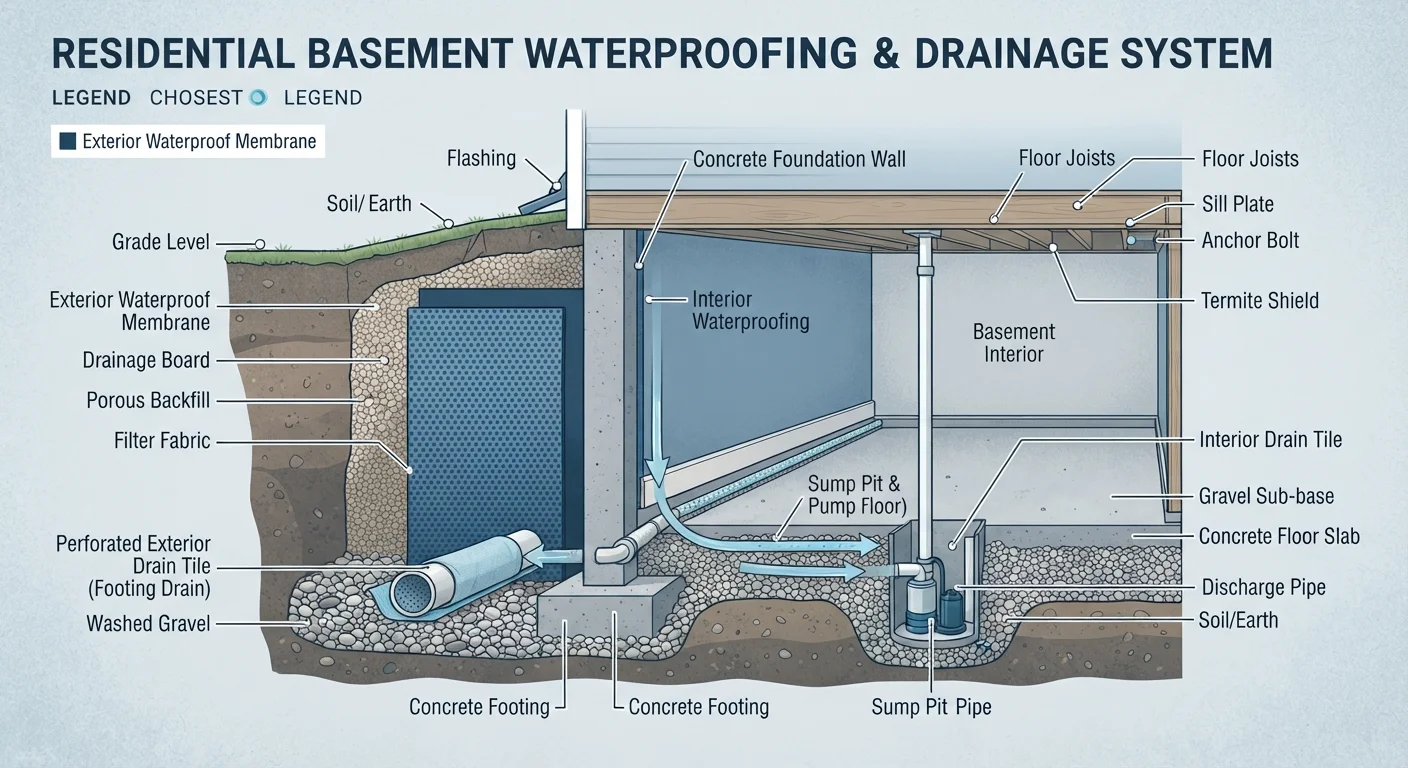
Interior waterproofing systems do not stop water from entering the foundation; instead, they collect it before it can damage the living space and channel it safely away. The core components are:
- Interior drain tile (French drain): A perforated pipe installed beneath the basement floor along the perimeter that collects infiltrating water and routes it to a sump pit.
- Sump pump: An electrically powered pump that automatically ejects collected water away from the home's foundation. A battery backup is advisable in areas prone to power outages during storms.
- Wall membrane panels: Plastic sheeting attached to interior walls that directs seeping water downward into the drain tile system rather than onto the floor.
Interior systems are generally less expensive and less disruptive than exterior approaches because they do not require excavation. They are a practical choice when exterior work is blocked by landscaping, driveways, or neighboring structures. The trade-off is that water still contacts the foundation material itself, which can, over time, contribute to deterioration if the underlying source is not addressed.
Test Before You Invest
To determine whether moisture is seeping through a wall or condensing on its surface, tape a piece of plastic sheeting firmly to the wall and seal all edges with tape. Leave it for 24-48 hours. If moisture appears on the plastic's room-facing side, condensation is the likely cause. If it appears between the plastic and the wall, water is migrating through the foundation. This simple test can save you from investing in the wrong solution.
Exterior Waterproofing: Stopping Water at the Source
Exterior waterproofing targets the problem before water ever reaches the foundation wall. The process involves excavating the soil around the home's perimeter down to the foundation footing - a significant undertaking that explains why this approach costs more and takes longer.
Once exposed, contractors typically:
- Clean and repair any existing cracks in the foundation wall.
- Apply a waterproof membrane or coating (commonly polymer-based) to the exterior face of the foundation.
- Install a drainage board or dimple mat to direct water downward away from the wall.
- Place exterior drain tile at the footing level to carry water to daylight or a sump.
- Backfill with gravel and properly graded soil.
Because exterior waterproofing addresses the root cause - keeping water from ever pressing against the foundation - it is generally considered the more comprehensive solution. However, it is not always practical or necessary. Many homeowners achieve effective results with interior systems, particularly when hydrostatic pressure is moderate.
Starting With the Basics: Surface-Level Improvements
Before investing in either interior or exterior waterproofing systems, it is worth addressing simpler factors that contribute to basement moisture. These steps are accessible to most homeowners and can meaningfully reduce water pressure on the foundation:
- Improve yard grading: Soil around the foundation should slope away from the house at a rate of roughly six inches of drop over the first ten feet. Flat or inward-sloping ground channels rainwater directly toward the foundation.
- Clean and extend gutters: Clogged gutters overflow near the foundation. Downspout extensions should direct water at least four to six feet from the house.
- Seal visible cracks: Small cracks in poured concrete walls can sometimes be addressed with hydraulic cement or polyurethane injection, though this is a temporary measure for active water flow rather than a complete solution.
These surface-level steps are a logical starting point. If moisture problems persist after addressing drainage and grading, a more thorough waterproofing system should be evaluated with help from a qualified contractor.
98%
Of basements that experience some water intrusion
According to the American Society of Home Inspectors, nearly all basements will experience some form of water intrusion over the life of the structure.
6 inches
Recommended slope away from foundation
Building professionals commonly recommend the ground slope at least six inches downward within the first ten feet from the foundation to redirect surface water effectively.